On flat ground a house grows upward and the stair is enough. On a slope it grows downward, and the moment the living floor is at the top and the bedrooms are two levels below it, the stair stops being a feature and starts being a tax. A private lift in a house is almost never about luxury. It is about whether the lowest floor of a hillside house gets used at all.
Joá Rio is published from ADV101, a five-suite villa in Joá offered at R$ 15,000,000, shown privately by appointment through Art de Vivre.
Ask about a viewing on WhatsApp
Why the slope makes the decision
A cliffside plot gives you a view and takes away your ground floor. The usual answer in Rio is to put the entrance at the road, which is at the top, and step the house down the rock from there. The arrival level gets the living rooms and the kitchen because that is where guests land. The bedrooms go below. The pool, the spa and the lounge go below that, because they want the widest part of the plot and the least overlooked position.
That produces a very good house and a genuinely long vertical distance between the front door and the bottom floor. Three levels is a lot of stair to carry luggage, groceries, laundry and, eventually, yourself. The lift is what makes the lowest floor part of the house rather than a place you go on purpose.
Hydraulic or traction
Two kinds turn up in private houses.
Hydraulic lifts are pushed from below by a ram driven by an oil pump. They need a small plant room, they are cheap to install relative to the alternative, they are quiet at the car, and they are forgiving of a shaft that is not perfectly plumb. They are slower, they use more energy per trip, and the oil temperature matters in a hot climate. For three floors, slow is irrelevant — you are travelling nine metres.
Traction lifts hang the car on ropes over a sheave with a counterweight. They are more efficient, faster, and now usually machine-room-less, with the motor in the shaft head. They cost more, and they want a properly built shaft.
For a three-level private house the honest answer is that either works, and the deciding factor is usually what the shaft will allow.
“The shaft is the thing you cannot add later. Everything inside it can be replaced.”
The shaft is the permanent decision
A lift is a hole through every slab in the house, plus a pit below the lowest stop and headroom above the highest. Cutting that hole into a finished concrete house afterwards is possible and it is disruptive, structural and expensive — you are removing part of a floor plate that was designed to be there, and the engineering to put the load back somewhere else is not a weekend.
Houses that were built with the shaft have it in the right place: adjacent to the stair, opening onto circulation rather than into a room, with the plant tucked behind it. Houses that had one added later usually announce it, because the only place it would fit was a corner of a bedroom.
The floor the lift unlocks
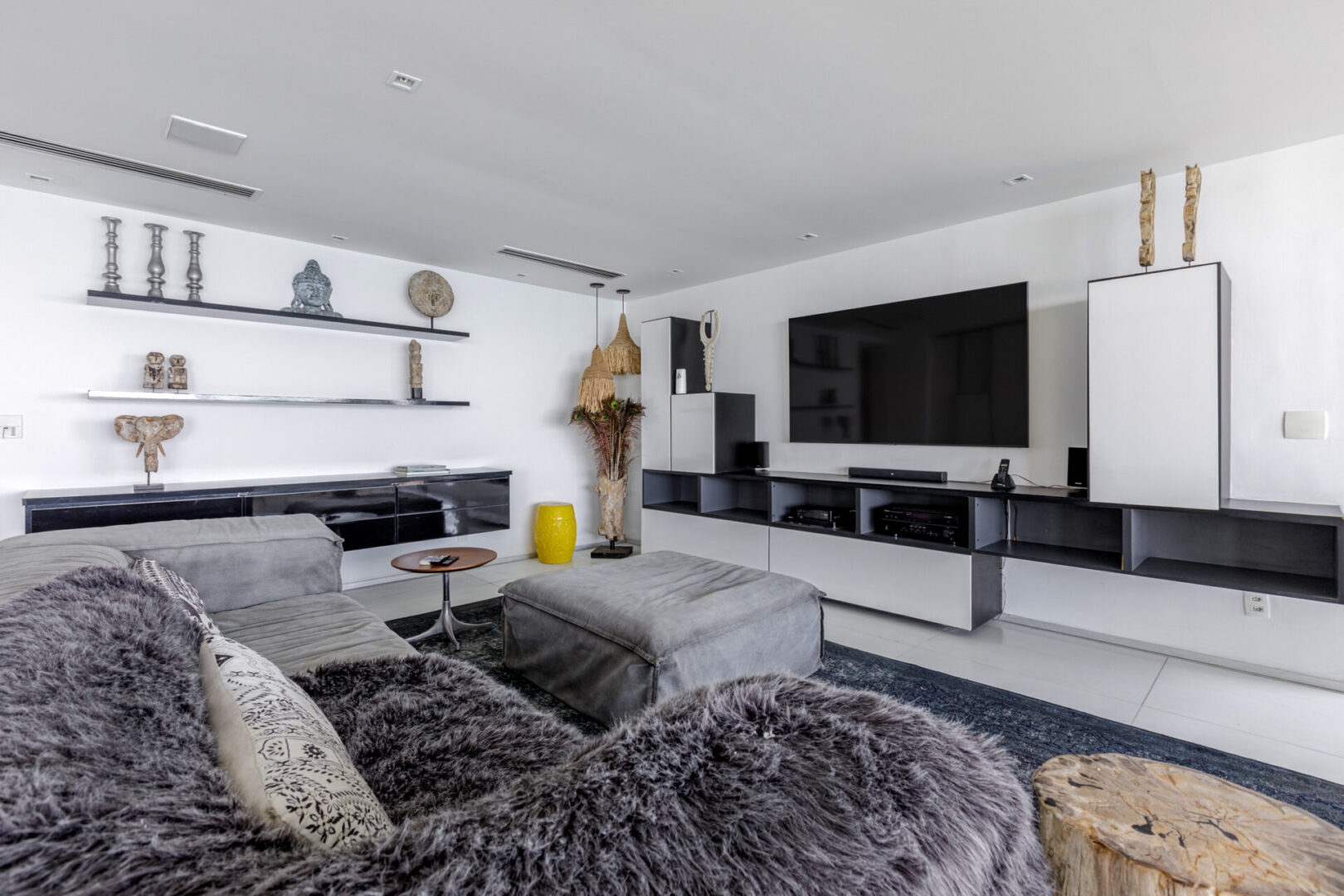
The bottom level of a stepped house is usually the best one — widest plot, most privacy, direct access to the pool deck, and the least traffic. It is also the one people stop going to if getting there is a three-flight commitment.
Put a lift in and it becomes the floor where the evening happens. That is the whole argument, and it is worth more than the specification sheet suggests.
Running it
A private lift is a piece of certified equipment, not an appliance. In Brazil it is inspected and maintained under contract, typically on a monthly or quarterly visit depending on the provider and the usage, and the contract covers the safety gear, the door interlocks, the cables or the ram, and the emergency lowering. Budget for it as a standing annual cost in the same bracket as pool service, not as an occasional repair.
Two practical items people forget. The first is power: a lift on a cliff wants to be on the generator or the battery backup, because the one time you need it is the one time the power is out. The second is the phone line or GSM unit in the car for the emergency call — it is a legal requirement, it is easy to let lapse, and it is the first thing an inspector asks about.
What to check on a viewing
Ride it to every floor and back. Listen at the door — a lift that clatters at the landing usually has doors out of adjustment, which is cheap, or guide shoes worn out, which is less cheap. Ask for the maintenance log and the last inspection. Ask whether it is on backup power. Ask where the pit drains to, because on a hillside it will eventually take water.
Then check the obvious thing: does the lift actually reach the bottom floor, or does it stop one level short and hand you back to the stair? That detail decides how the house is lived in.