A listing is a summary written by someone who wants you to visit. That is not a criticism; it is the job. But it means the four or five numbers at the top of every luxury listing are doing a lot of compressed work, and two listings using the same words can describe very different houses. Here is what the words mean in Brazil, and the questions that turn a listing into a fact sheet.
Joá Rio is published from ADV101, a five-suite villa in Joá offered at R$ 15,000,000, shown privately by appointment through Art de Vivre.
Ask about a viewing on WhatsApp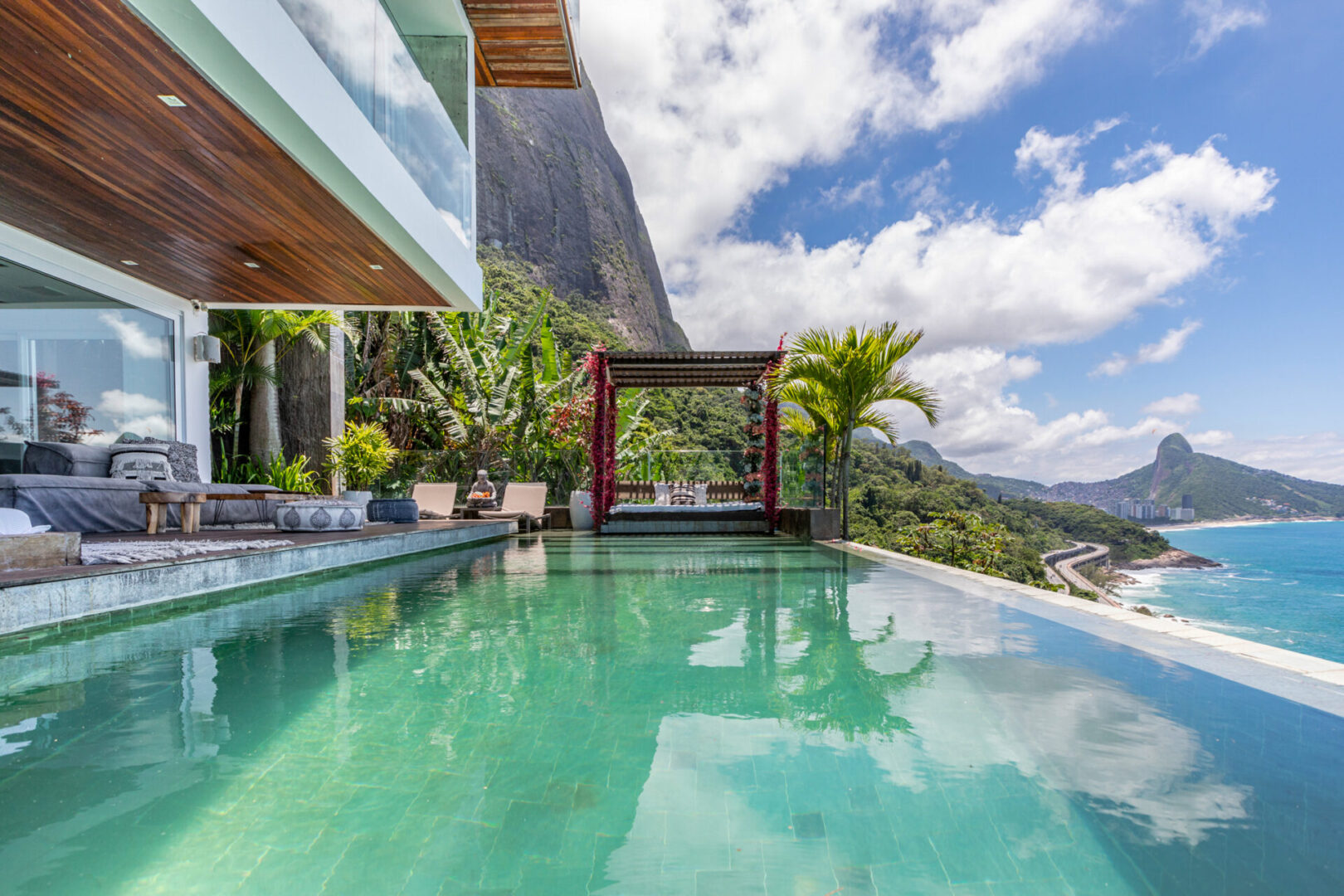
Area: three numbers, one word
Brazilian listings use several area figures and often quote only one.
Área do terreno is the land — the plot itself. On a hillside this number needs a second question attached to it, because a 2,000 m² plot on a 40-degree slope and a 2,000 m² plot on the flat are not comparable. Ask how much of it is usable, and how much is rock, setback or planted bank.
Área construída is the built area — everything the structure covers, usually measured to the outside of the walls, and typically including garages, circulation and covered terraces.
Área útil is the usable internal area: what is left when you take out the walls themselves and the parts you cannot furnish. It is always smaller than área construída, sometimes by fifteen or twenty per cent.
A listing that quotes 800 m² has told you one of these three numbers. Ask which.
Suites, bedrooms and bathrooms
In Brazil a suíte is a bedroom with its own bathroom. So "five suites" means five bedrooms, each en suite — which is a stronger statement than "five bedrooms, five bathrooms", because the latter can mean three en suite and two sharing down the hall.
Total bathroom counts usually include the lavabo — the guest cloakroom with no shower — and any staff bathroom. A house listed with eight bathrooms and five suites has three that are not attached to a bedroom, and it is worth knowing where they are.
“Five suites is a stronger statement than five bedrooms and five bathrooms. The second one can mean three en suite and two down the hall.”
"Ocean view" and its several meanings
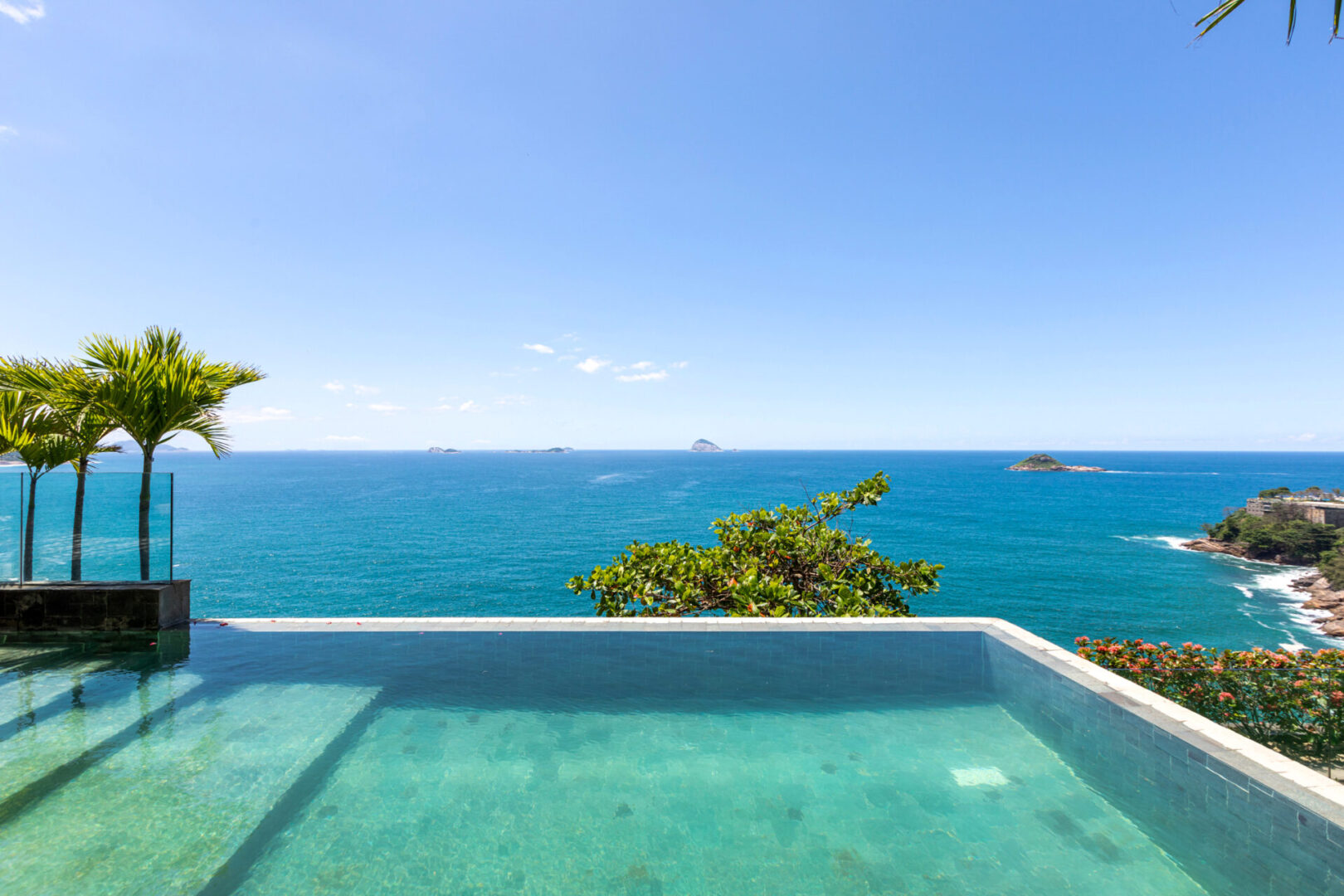
Ocean view is the most elastic phrase in the category. It runs from a house where every principal room faces open water, through a house with a slice of sea from one corner of one bedroom, to a house where you can see the ocean if you stand on the terrace and lean.
The useful version of the question is not "does it have an ocean view" but "from which rooms, and at what angle". A listing that says ocean from every room is making a claim you can verify in ten minutes on a viewing by standing in each room and looking.
The second question, which almost nobody asks and which matters more over time: is the view protected? A view across a plot that could be built on is a view with a clock on it. In a neighbourhood of large single plots with height limits it is usually safe; below an undeveloped parcel it may not be.
Photographs, and what they do
Wide lenses make rooms larger and terraces deeper. This is normal practice, not deception, but it means the plan matters more than the pictures.
Ask for a floor plan with dimensions. Five minutes with a plan tells you things no set of photographs will: how the circulation works, whether the bedrooms are stacked over the living rooms, where the service areas are, and whether the house has one good room or four.
The documents that make it real
Two pieces of paper decide whether a house is what the listing says.
The matrícula is the property's registry record at the cartório de registro de imóveis. It states the registered area, the boundaries, the current owner and every charge, mortgage or dispute attached to the title. It is the single most important document in a Brazilian purchase and a recent copy can be obtained by anybody.
The habite-se is the municipal certificate that the building was completed in accordance with its approved plans. Where a house has been extended, the question is whether the extension is on the approved plans and on the matrícula. Unregistered built area is common, it is fixable, and it is much cheaper to discover before you agree a price.
Five questions that turn a listing into a fact sheet
Which area figure is quoted, and what are the other two? How many of the bedrooms are en suite, and where are the remaining bathrooms? From which rooms is the water visible, and is the sightline protected? Does the matrícula show the same built area as the listing? And what are the standing costs — IPTU, condominium or association fee where one exists, staff, pool, garden, and any private security contribution?
A good agent will have all five answers before you ask. That, more than anything in the copy, is the signal worth reading.