The MICHELIN Guide last awarded stars in Rio de Janeiro in its 2019 edition. The following year the publisher closed its Brazil book, and the reviewing stopped. The cooking did not. The city's best kitchens kept their knives, their stock pots, their suppliers on the fish boats in Niterói and the root growers in the Serra da Mantiqueira. What remained was a shortlist of rooms that cook at a world-class standard — and a guidebook that no longer publishes in Brazil to say so.
Joá Rio is published from ADV101, a five-suite villa in Joá offered at R$ 15,000,000, shown privately by appointment through Art de Vivre.
Ask about a viewing on WhatsAppConsider this, then, an interim dossier. Six tables, the ones I bring guests to when they ask for the table. Five of them held MICHELIN stars while the Guide still reviewed Brazil, and would hold them again if the Guide came back; the sixth is a hotel dining room so exact, so patiently refined, it never needed a star to be taken seriously. I have ranked them not by preference — every one is a first choice on a given night — but by the order in which I tend to introduce them to a first-time guest. The house always books. The city is always on time for dinner. Dress for warm weather; dress for the room.
First, some context. Rio's reputation abroad is a beach-club reputation: coconut water and grilled shrimp on a wooden platter, a plastic cup of caipirinha, the flip-flop uniform of a city that, most months, is simply too warm to dress for dinner. That reputation is accurate; it is also the simplest of the ways a carioca eats. Beneath it lives the boteco — the corner bar with a mother's kitchen behind a glass case, the caldinho de feijão and the bolinho de bacalhau, a life organised around a cold beer and a long argument. Above that lives the city's fine dining: sober rooms, long tastings, chefs who have worked in Bilbao, Copenhagen, Modena, Paris, come home, and opened something small. It is this last tier that MICHELIN used to review in Rio, and it is the one this piece is about.
“The Guide stopped publishing. The kitchens kept cooking.”
I. Oro — the theatre of fire
Felipe Bronze cooks with smoke the way another chef uses salt. Oro, now in Leblon after a decade in Barra da Tijuca, is the Rio kitchen that most resembles a stage set and most behaves like a laboratory — a white, stone-walled dining room where the pass is visible from every seat, every dish arrives with a brief oral liner note, and nothing on the plate is as simple as it looks. Bronze earned two Guide stars in the final Brazilian edition. Nothing in his cooking since has suggested he earned them by accident.
The tasting is a long walk, usually fifteen or eighteen courses, and it moves in weather. A chilled disk of buffalo milk with a wasabi oil, bright and almost painful with freshness, will be followed by a charred heart of palm laid over a pool of ash broth; a Brazil-nut risotto arrives under a lid of applewood smoke lifted tableside; a slow-cooked short rib is finished on a fire you can smell from the door. Bronze's gift is restraint inside maximalism — he will push a flavour to the edge of intensity, and then cut it with something cold, something green, something that tastes like a morning at the market in Cobal.
Reserve two or three weeks out for weekends, less for a Tuesday. The wine programme is heavy on small South American producers — Chilean pinots from Itata, Uruguayan tannats from Garzón, the new-wave Brazilian sparkling from Pinto Bandeira. Skip the pairing only if you already know what you like; otherwise, submit to it.
Bronze's signature — unchanged for the better part of a decade — is a dish called Pupunha ao fogo: a heart of palm, fresh rather than jarred, split and charred over embers until the outer layer crisps; laid on a pale-green purée of its own pulp; finished with a drop of tucupi, the fermented manioc broth from the Amazon, and a single micro-leaf of jambu, the tingling herb that makes your tongue hum for a moment afterwards. It tastes of the smoke and the garden and, improbably, of the sea. It tells you everything you need to know about what Bronze is doing: indigenous ingredients used with a French technique, a European respect for the ingredient, a Brazilian willingness to play. The sommelier, Marina Bueno, runs the floor with a notebook; tell her what you ate last and she will steer the night.
II. Oteque — the fish on the plate
Alberto Landgraf is a Paulista who moved to Rio because he wanted to be closer to the water. It shows. Oteque, set inside a converted house on a quiet street in Botafogo, is the city's most serious ingredient-driven kitchen, built around the day's catch from the small boats that land at Copacabana, Itaipu, and the Ilha Grande bay. Landgraf held two Guide stars in Rio's last edition. The room is austere in the way a very expensive Scandinavian room is austere — pale wood, a single low painting, the kitchen visible across a counter — and the tasting is where the work is done.
Expect raw fish, expect lightly cured fish, expect fish barely kissed by a flame. Landgraf is obsessive about water temperature, flesh texture, the exact minute after landing when a dourado is best eaten. You will be handed a slice of garoupa with a single drop of pickled green mango and feel, for a long beat, that you have never actually tasted garoupa before. You will eat it again three courses later in a different dress — crudo, smoked, confit in olive oil — and learn something. Dessert, which other fish-first chefs tend to phone in, is here a small serious piece of pastry: a caramelised milk with yuzu, an almond tart the size of a coin.
A note on style: Oteque is not a place for photographs. The lighting is too low, the pace too deliberate. Put the phone away; the staff will quietly thank you.
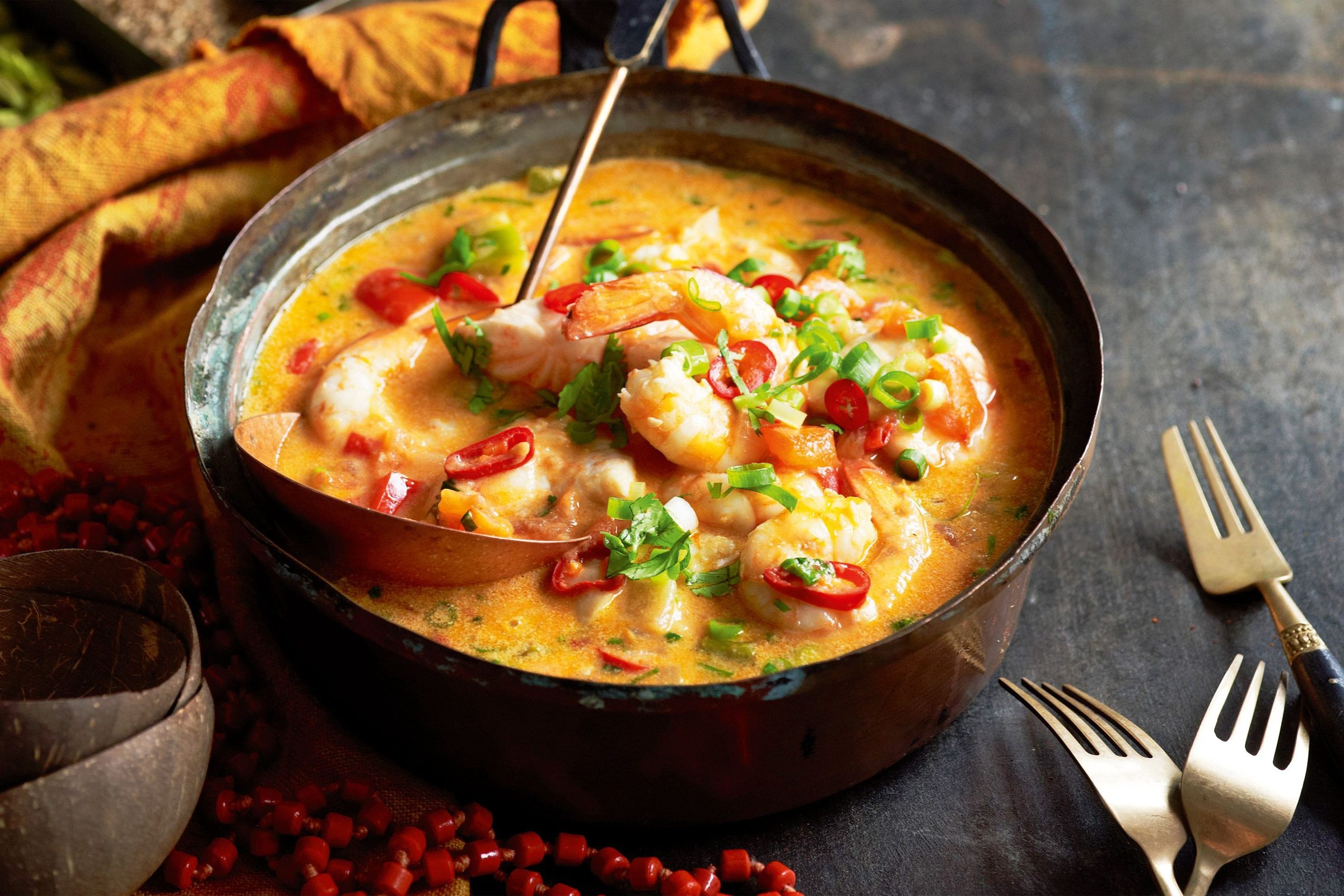
Moqueca is the benchmark. Do not skip it.
Every serious Rio kitchen eventually makes its peace with moqueca — the fish stew from the coast of Bahia and Espírito Santo, cooked in a clay pot with coconut milk, dendê oil, tomato, onion, coriander. At Oro, Bronze serves it deconstructed in a single deep spoon. At Lasai, Costa e Silva cooks his from whatever the boats dropped at Botafogo that morning, with a black-bean oil. At Fasano, the moqueca has a Mediterranean accent — more olive oil, less dendê. The dish is a litmus test for a Rio chef: tell me how they treat moqueca and I will tell you what they believe about cooking.
III. Lasai — the garden kitchen
Rafa Costa e Silva came home from Mugaritz to open a house on a residential street in Botafogo, at the foot of Corcovado, in 2014. Lasai means enough, calm in Basque; the word is a fair translation of the experience. The kitchen is small, the garden behind it is not much bigger, and the menu is written that morning from what arrived at the back door: a box from a farmer Costa e Silva has been buying from for a decade, a basket from the herb grower in Teresópolis, a fish from the Cagarras Islands. He held one Guide star when the Guide came through; he deserved two and may yet have them.
The tasting room seats twenty-eight and books out a month in advance. Courses arrive with the chef's hand still on them — he plates many of them himself at a pass visible from the dining room — and the cooking reads deceptively simple. A single grilled palm heart with its own oil, flaked with smoked salt. A slice of carne de sol with a purée of green banana. A piece of sourdough bread that has been fermented for seventy-two hours and arrives warm enough to steam a little piece of butter across its crust. Nothing is shouted; everything is in tune.
Lasai is the Rio restaurant I take guests to when I want them to understand that haute cuisine in Brazil is not an import — it is a local dialect, written by chefs who have gone out, learned the grammar, and come home to write in it.
A note on the house. Rafa worked three years at Mugaritz, in the Basque country, before opening Lasai with his wife, Malena, who runs the dining room. The small garden behind the kitchen supplies the herbs and the chilis; a walnut tree in the courtyard throws shade over a single outdoor table. The pace of a Lasai tasting is slow on purpose — four hours is standard, five is common, and the kitchen will not rush you out. There is a short à la carte at lunch on Fridays; if you have only one afternoon in Rio and want to eat seriously, take it.
IV. Olympe — the grande dame
Olympe has been in the same white townhouse in Jardim Botânico since 1988, which makes it the oldest serious fine-dining address in Rio and, very possibly, the most continuously influential. Claude Troisgros — son of Pierre, grandson of Jean-Baptiste, heir to a dynasty of the French haute bourgeoisie — came to Brazil in his twenties as a stagiaire in a Gávea kitchen and never quite left. His son Thomas now runs the pass beside him. Olympe has held a Guide star across editions; the restaurant reads, on a good night, like the summation of forty years of one family's thinking about what Brazilian ingredients will do if they are asked politely in French.
The Olympe signature is a hearts-of-palm fettuccine — thin strips of palm cut to the thickness of pasta, dressed with a reduction of parmesan broth and a single black truffle shaving. It has been on the menu, in some form, for three decades. Around it rotate dishes that read like dispatches from wherever Claude went that week — a duck magret with açaí jus, a sole meunière with a cupuaçu brown butter, a tapioca soufflé the staff will finish at your table. The wine list is French-weighted, Burgundy-heavy, with a quiet but serious Brazilian page.
Olympe is the city's best-mannered room. The staff remember you. The chef walks the floor late. The night ends slowly, on purpose.
V. Mee — the hotel pan-Asian
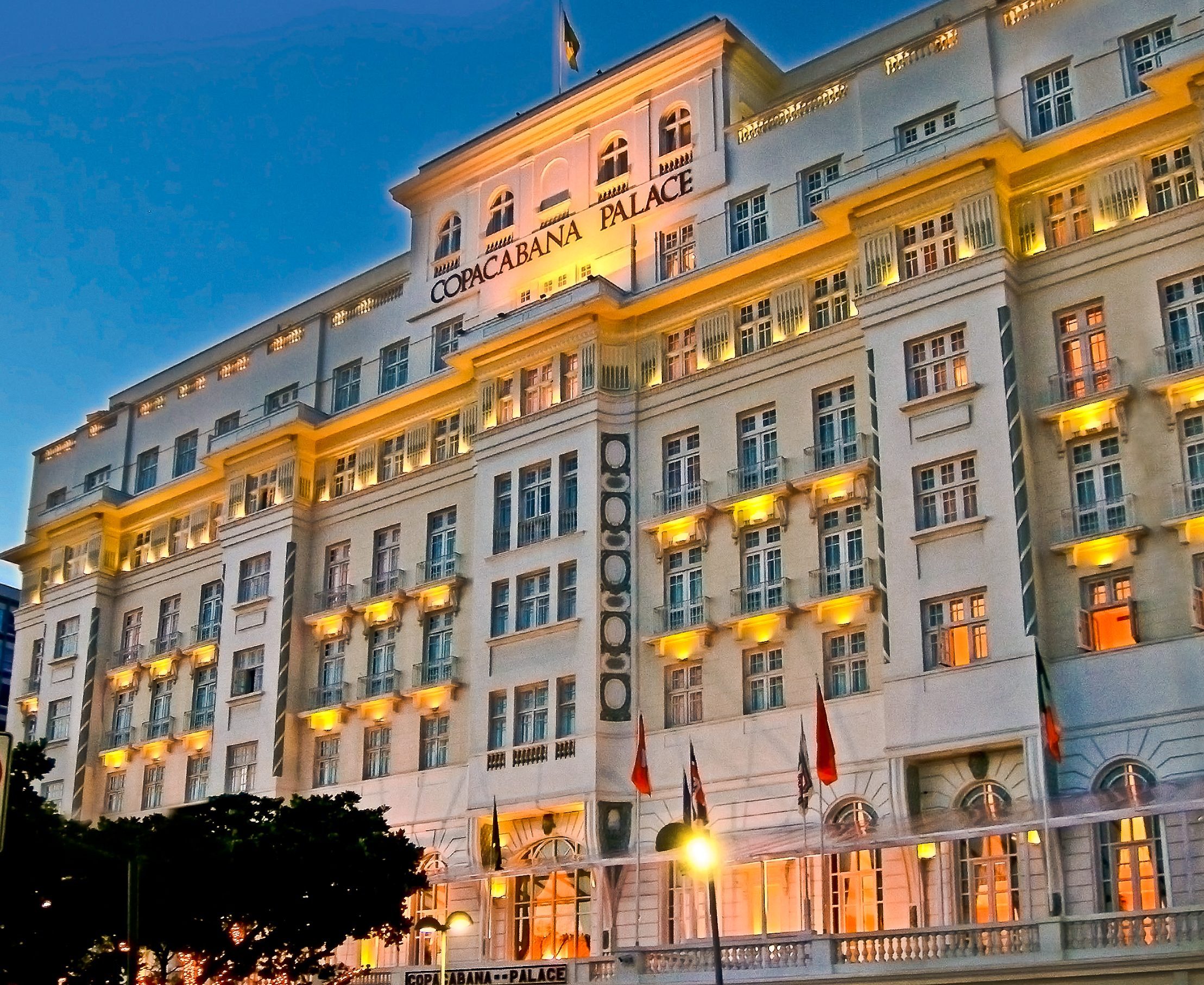
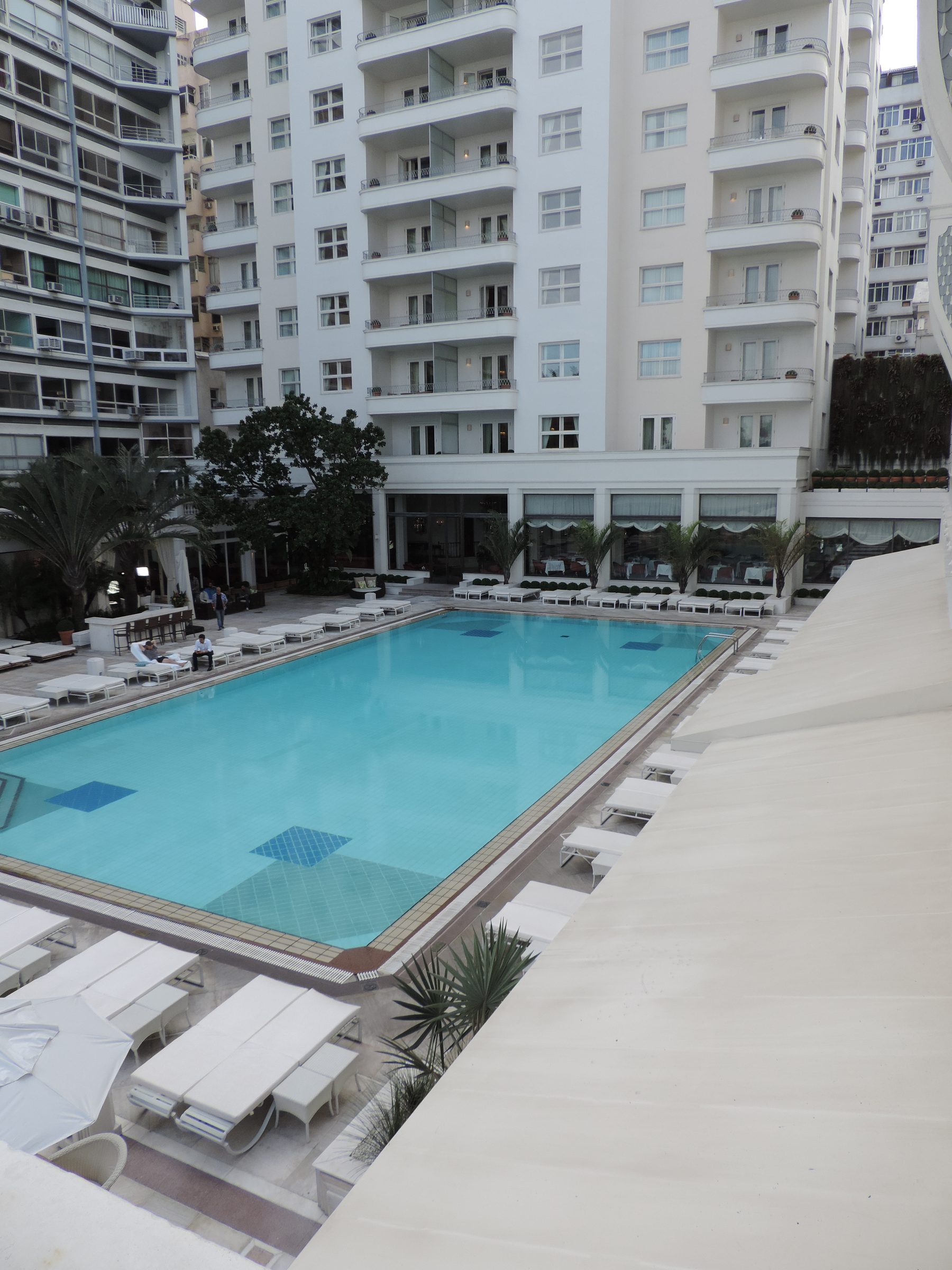
Mee is the pan-Asian room on the ground floor of the Copacabana Palace, behind the gate and past the pool. It held a Guide star throughout the Rio edition's run — the first and, so far, only Asian-restaurant star the Guide ever awarded in Brazil — and it continues to cook, nightly, to that standard. Chef Kazuo Harada, Japanese by training, built the menu on the logic that pan-Asian does not mean scattered: there is a dim-sum list, a tempura section, a single tight sushi page, a handful of Thai and Vietnamese numbers, and a pair of showstopping whole-fish courses. Every plate arrives with the same precise hand. Nothing is phoned in for the hotel's guests.
Order the Peking duck forty-eight hours ahead — it must be done at the property — and share it. Order a tempura of enoki mushrooms, so thin they read as a gold-leaf sculpture. Order the robata-grilled wagyu cheeks if they are on. Finish with a coconut and passionfruit dessert that is, very quietly, the best single sweet plate in the city. The room itself is a dark-wood and low-lit set piece; the crowd is half hotel guest, half carioca family celebrating something. Both belong.
A note on the hotel: the Copacabana Palace has been taking reservations since 1923. The pool terrace, where you can drink a caipirinha before dinner, is one of the city's great set pieces. Arrive early.
And a postscript on the building itself. The Palace is not a discreet address — it was built to be seen, its white art-deco facade fronting directly onto the Copacabana beach, and a century of carioca society has used it as its extended living room. Marlene Dietrich sang in the Golden Room in 1959; Frank Sinatra filled it in 1980; the Rolling Stones have stayed in the top-floor suite more times than their management will confirm. Dinner at Mee is, in that sense, a dinner inside a historic document. You are not paying for the history — the cooking stands alone — but the history is a considerable second course.
VI. Fasano Al Mare — the Ipanema room
The dining room at Hotel Fasano Ipanema has never chased a star, which is part of what makes it work. Fasano Al Mare is an Italian seafood restaurant overlooking the last blocks of Ipanema beach before the Arpoador rock cuts the sand; the glass is floor-to-ceiling, the service is in the Fasano family key, and the kitchen — currently under the Italian-born chef Paolo Lavezzini — is serious, disciplined, and entirely capable of starring. Think of it as the seventh table in a list of six: a standing reminder that a great hotel restaurant is a discipline in its own right, and that Rio has one of the best of them.
The menu is built around the Atlantic catch and a thoroughly Italian hand. A carpaccio of sea bass with a citrus oil and capers. A black-ink spaghetti with Cariri lobster, a single claw laid across the top. A risotto of langoustine with a saffron so bright it will mark your napkin. The tiramisu, served in a coupé glass with a spoon thinner than a coin, is finished tableside. The wine list is the thickest in Rio — a serious Italian page, a Piedmont pocket that runs to three-figure Barolos, and a small but well-chosen Brazilian section.
Ask for table 12 or the corner two-top by the window. Arrive at 8.30 and you will see the sun set through the room.
One more thing about Fasano. The house cocktail — a basil and cachaça number the bartender will call a Fasano — is one of the better pre-dinner drinks in the city. Drink it in the small bar to the left of the lobby, not at the table; the kitchen will be delighted to hold your booking an extra ten minutes.
A seventh, by way of honourable mention
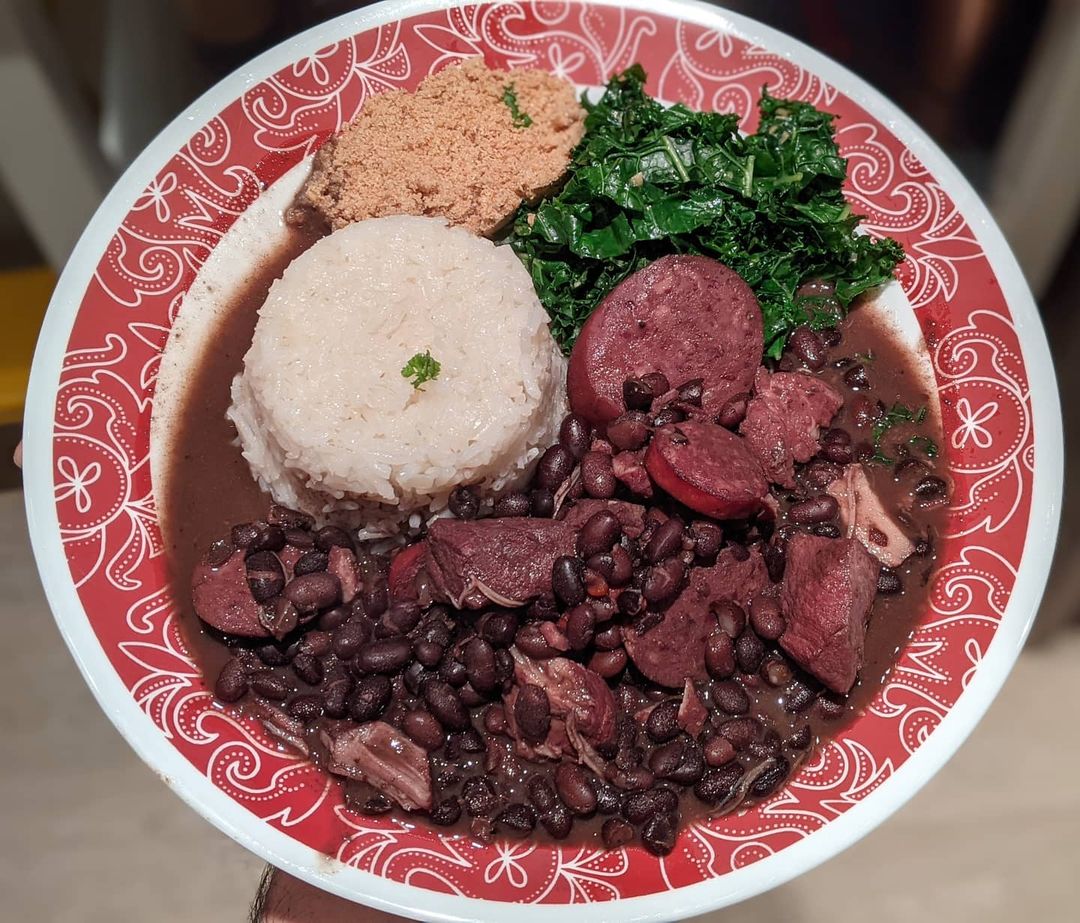
If you are in Rio for a week, include Aconchego Carioca in Praça da Bandeira — a boteco written by chef Katia Barbosa with the seriousness a fine-dining kitchen brings to a grain of salt. Barbosa's bolinho de feijoada — a crisp ball of black-bean fritter filled with pulled pork and served with a ramekin of cabbage slaw — is the single most-copied dish in Rio, and for a reason. The room is bright and loud and family-run. The beer is very cold. If Oro and Oteque show you the ceiling of Rio's cooking, Aconchego shows you its floor — and the floor, here, is already very high.
The same honourable-mention tier holds three other names worth a journal of their own. Aprazível, up the hill in Santa Teresa, for a long terrace lunch with the bay below and a green-coriander soup that remakes your afternoon. Sud, O Pássaro Verde, in Copacabana, for a serious Italian kitchen that turns out the best bottarga pasta in the city. And CT Boucherie, the Gávea grill from the Troisgros family, where the side dishes arrive in waves, as theatrical as at any of our six — and the house hanger steak, cut and aged in-house, is the best piece of beef on the Atlantic coast.
“Tell me how a chef treats moqueca and I will tell you what they believe about cooking.”
A note on booking, and on behaviour
All six of these rooms book out. Oro and Oteque require two to four weeks for a weekend, a week for a weeknight; Lasai is a month; Olympe, Mee, and Fasano can usually take a table at a week's notice if you are flexible on time. The concierge at the house can route any of them — we also keep a short list of the rooms' headwaiters, which means a late change, a special request, a table with a certain view, tends to be possible where it would not be for a cold call.
Dress is the quiet code of a tropical city: a linen jacket is warmly welcomed, a tie is not expected, jeans are fine in neat cut but not at Olympe or Fasano. Men in shorts will be quietly redirected. Women in resort wear — the long linen dress, the slip skirt — read correctly in any of these rooms. Most importantly: the carioca dinner starts late. Eight-thirty for nine is the carioca version of on time. Nothing closes before midnight; most of these rooms will let the last table close itself.
These six tables do not make the case by themselves. Add to them, if you are here a week: Aprazível for sunset in Santa Teresa; Aconchego Carioca in Praça da Bandeira for the carioca boteco rewritten with care; Sud, O Pássaro Verde for a long Sunday lunch in Copacabana; Pérgula at the Palace for a breakfast that repays attention. The Guide may come back to Rio. It does not need to in order for the kitchens to keep cooking.