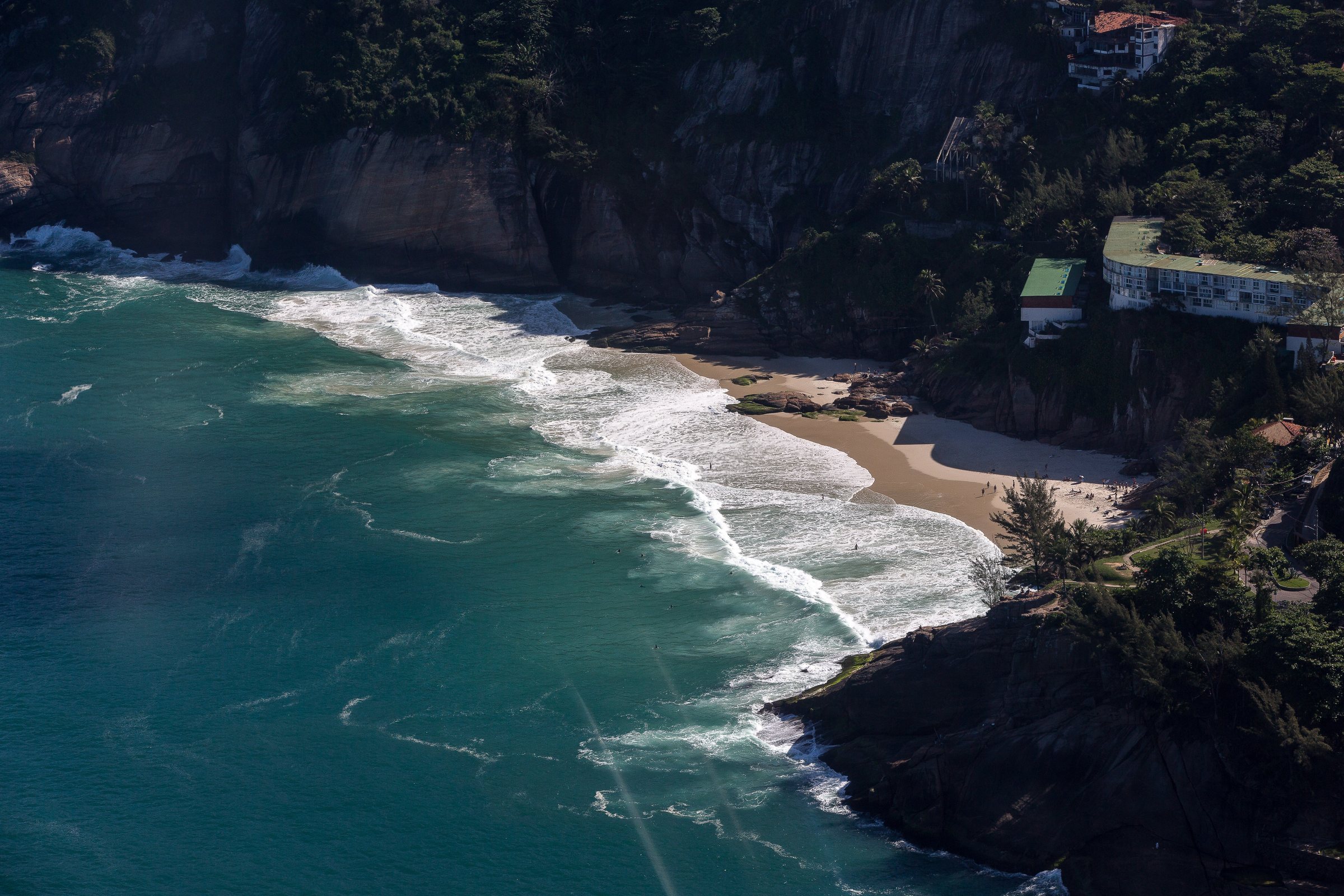
There is a beach below Joá that most of Rio has never stood on. It has no kiosk, no lifeguard tower you can drive to, no name on the bus blind. For half of every day it does not exist at all — the sea takes the sand back twice a day and hands it over again on its own schedule. Praia da Joatinga is the most hidden beach in the city, and the most rewarding to reach, and the point of this guide is to get you down to it and, just as importantly, back up.
Joá Rio is published from ADV101, a five-suite villa in Joá offered at R$ 15,000,000, shown privately by appointment through Art de Vivre.
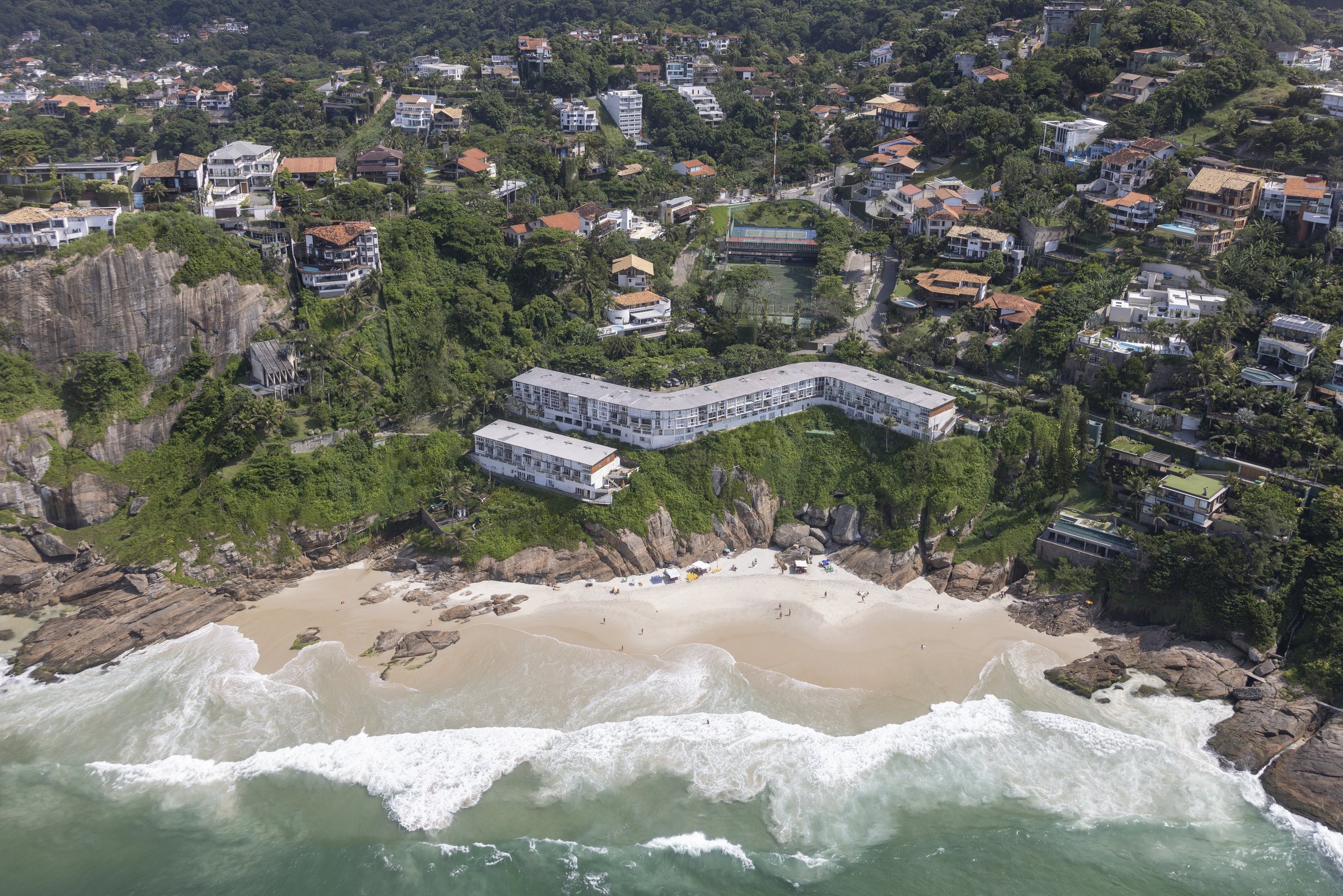
Ask about a viewing on WhatsAppIt sits on the stretch of coast between São Conrado and Barra da Tijuca, at the foot of the residential cliffs of Joá. A crescent of pale sand under two hundred metres long, clear water, and a wall of granite behind — the kind of cove that would be famous anywhere it was easy to park. It is not easy to park. That is the whole story of why it stays beautiful.
Getting there — the gate, the stairs, the rocks
There is no public road to the sand. Access is through a private, gated condominium — the Condomínio da Joatinga — off the Estrada do Joá, the coast road that connects São Conrado to Barra. This surprises people, and it shouldn't be mistaken for a barrier: Brazilian beaches are public by law, and the condominium lets visitors through. But it does mean the arrival has a procedure.
You reach the gatehouse from the Estrada do Joá and give your name at the guarita — the security post. Once through, you follow the internal streets to a staircase that begins the descent, and from there the route becomes a set of steps, a short cement ramp, and a final stretch of rocks you clamber over to reach the sand. It is a brief scramble, not a hike, but it is real: wear closed shoes with grip, not flip-flops. The footing on the rocks — wet, uneven, occasionally slick with spray — is the everyday hazard here, more than the trail itself.
- Entrance: the gated Condomínio da Joatinga, off the Estrada do Joá. Give your name at the gatehouse.
- The descent: internal streets, then a staircase, a cement ramp, and a scramble over rocks. Grippy, closed shoes.
- Tide: go at low tide — ideally 0.5 m or lower. At high tide there is no beach.
- Timing: mornings. By late afternoon the cliff throws the sand into shadow.
- Parking: a small lot inside the condominium; capped and often full by mid-morning on weekends. Arrive by ~8 a.m.
- Bring: water and food — there are no kiosks. Take your rubbish out with you.
The tide is not a detail — it is the rule
Everything about a visit to Joatinga bends around the tide, and this is the one paragraph to read twice. The beach is a narrow band of sand at the base of a cliff. At high tide, the waves come all the way in and cover it — there is simply no beach, and worse, the water pushes you against the rocks with nowhere to retreat. People have had to be helped back over the boulders when a swell came up faster than they expected. The sea here can change in fifteen minutes.
So: check a tide table before you leave, and plan your window around low water. A tide of roughly half a metre or lower is what you want; go in on the ebb, and be off the rocks before the flood. This is not over-caution. It is the single piece of local knowledge that separates a perfect morning at Joatinga from a genuinely dangerous one. Every reliable account of the beach says the same thing, and we will say it again: do not go at high tide.
Grottoes, and a natural pool.
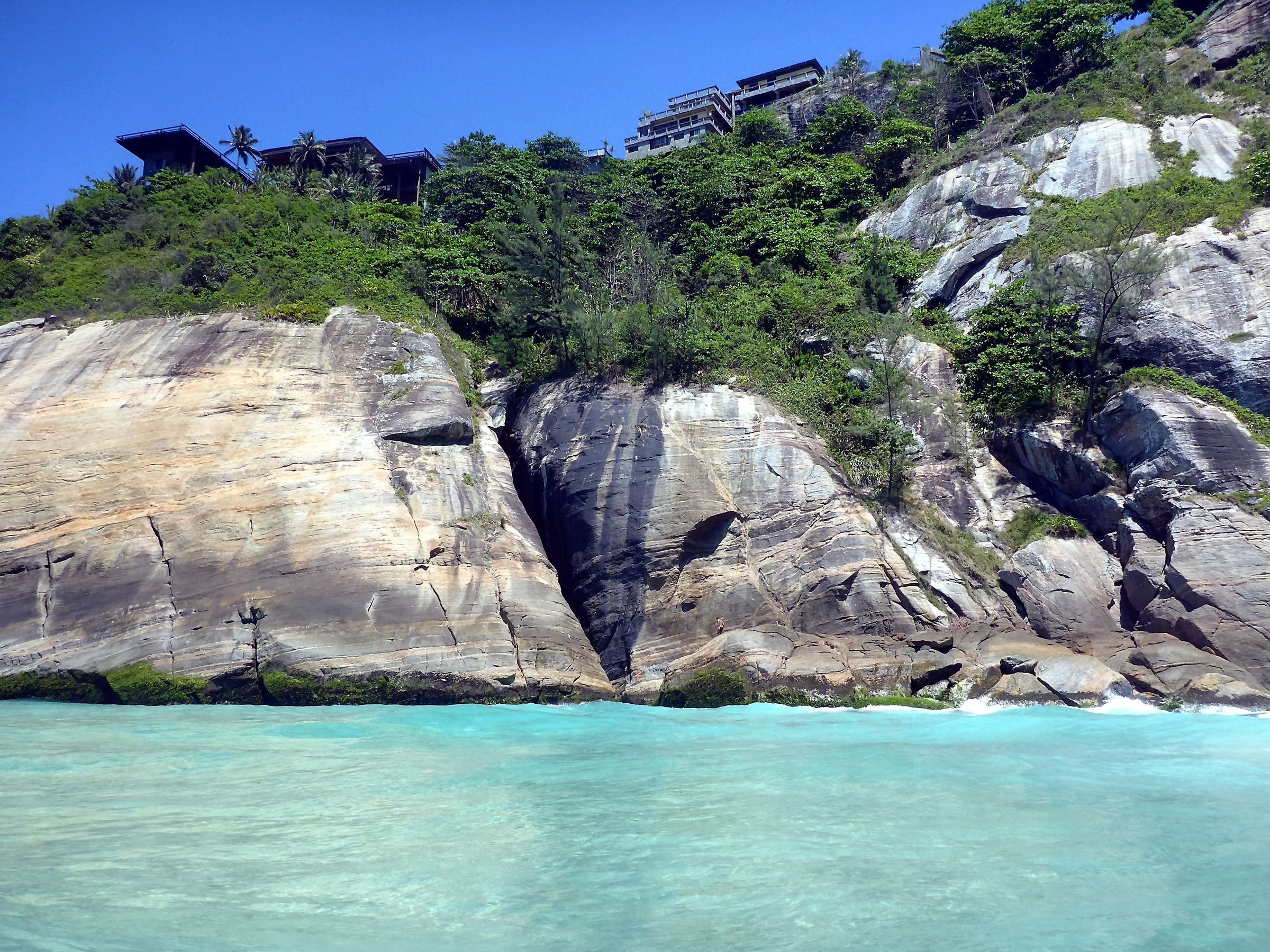
At one side the cliff opens into sea-worn grottoes; at the other, on a calm day, the rocks hold a shallow natural pool that families use with small children. Between them is the sand — pale, fine, and, when the tide is generous, wide enough for the surprisingly loyal crowd of surfers, photographers and in-the-know cariocas who treat this as their private stretch.
Surfing Joatinga
It is a genuine surf spot, and an under-the-radar one. The wave is a beach break: short rides, medium force, generally in the half-metre-to-a-metre range, breaking best on an east swell with a northeast wind behind it. It is friendly enough for a competent beginner and popular with bodyboarders. The catch is the same as everything else here — you get in and out over rocks, so you time your entry to the sets and you mind your feet. When the swell is bigger the wave loses its shape and the rocks stop being charming.
A note on the crowd, and the courtesy
Joatinga draws surfers, a young and good-looking beach set, and — because of where it is — people who value not being noticed. The beach has stayed lovely precisely because it is hard to reach and because the people who use it treat it well. You are passing through someone's gated neighborhood to get to a public beach: give your name pleasantly, park where you're told, keep the noise down, and carry out everything you carry in. There are no bins and no staff. The beach is only as clean as its last visitor left it.
If the tide is against you
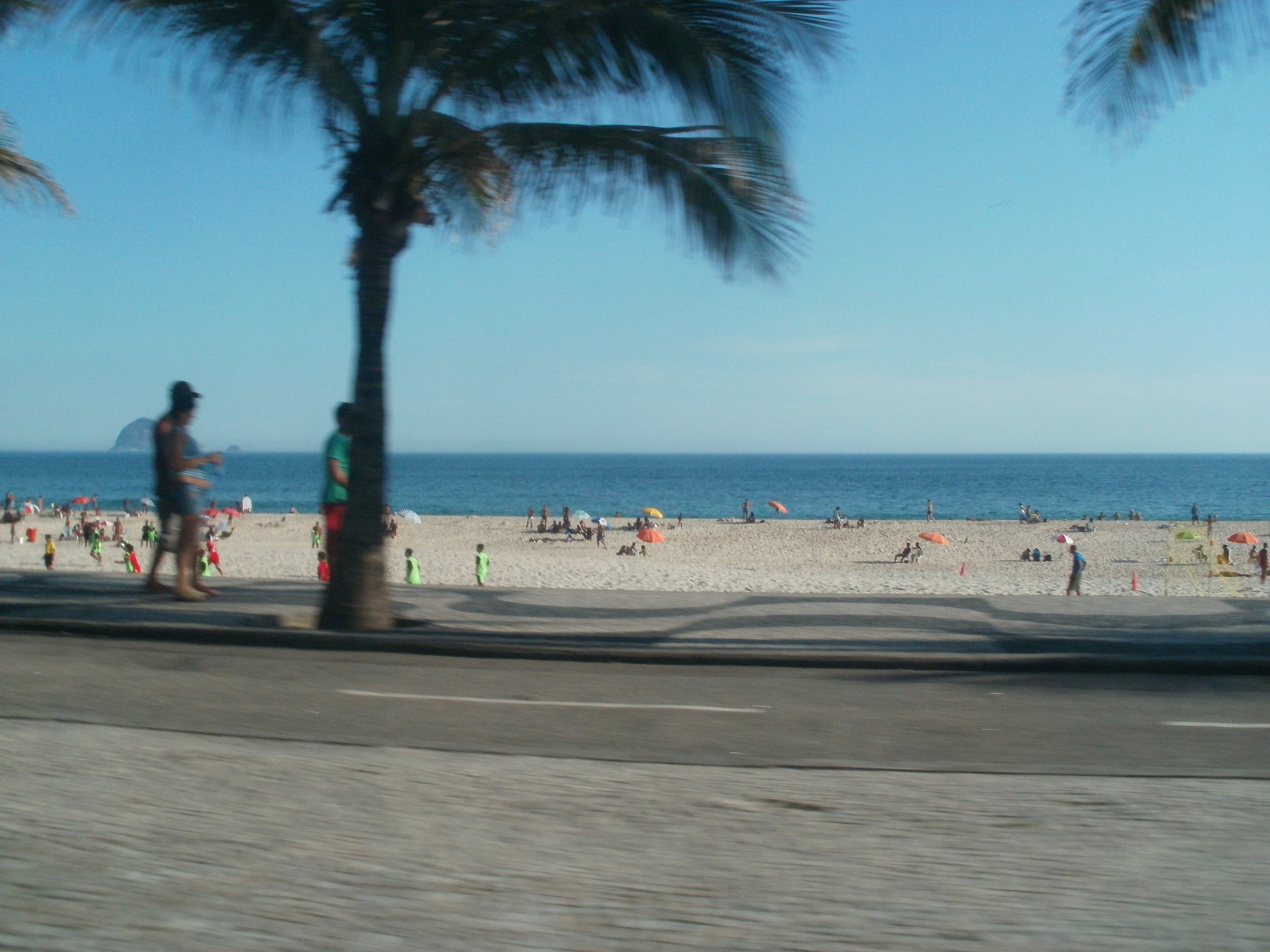
Some mornings the tide simply won't cooperate, and it isn't worth the risk. When that happens, the coast around Joá gives you options within a few minutes' drive. São Conrado, immediately east, is a wide, open, conventional beach — the one where the hang-gliders come down off Pedra Bonita, and the easiest place in the area to spend a straightforward afternoon on the sand. The Mirante do Joá, the free public lookout on the Estrada do Joá, gives you the postcard of the whole coast — São Conrado, the Pedra da Gávea, Morro Dois Irmãos — without a single stair down to the water. Neither is Joatinga. But Joatinga will keep. Come back on the right tide.
The cliffs above this beach are the reason for the neighborhood itself. How Joá came to be built on them — and who lives there now — is the rest of the guide.