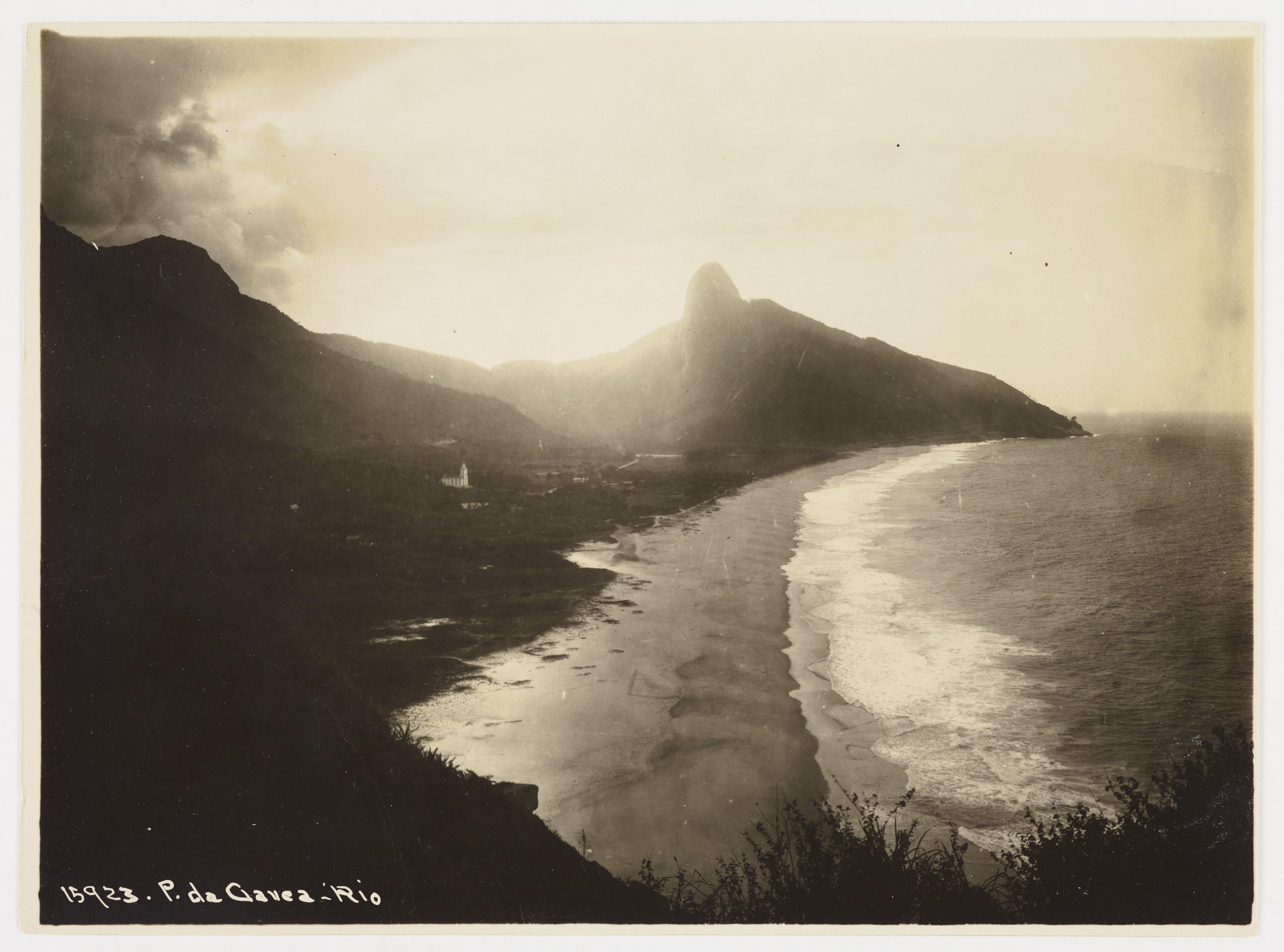
For most of Rio's history, Joá was the gap. The city grew along its beaches — Flamengo, Copacabana, Ipanema, Leblon — and then ran into the mountains. West of São Conrado the coast turned to sheer rock under the Pedra da Gávea, and the map went quiet. What is now the most expensive neighborhood in the city was, within living memory, a wooded cliff you could not easily get to and had little reason to. The story of Joá is the story of how that changed — and of how the neighborhood has spent every decade since trying, quietly, to change it back.
Joá Rio is published from ADV101, a five-suite villa in Joá offered at R$ 15,000,000, shown privately by appointment through Art de Vivre.
Ask about a viewing on WhatsApp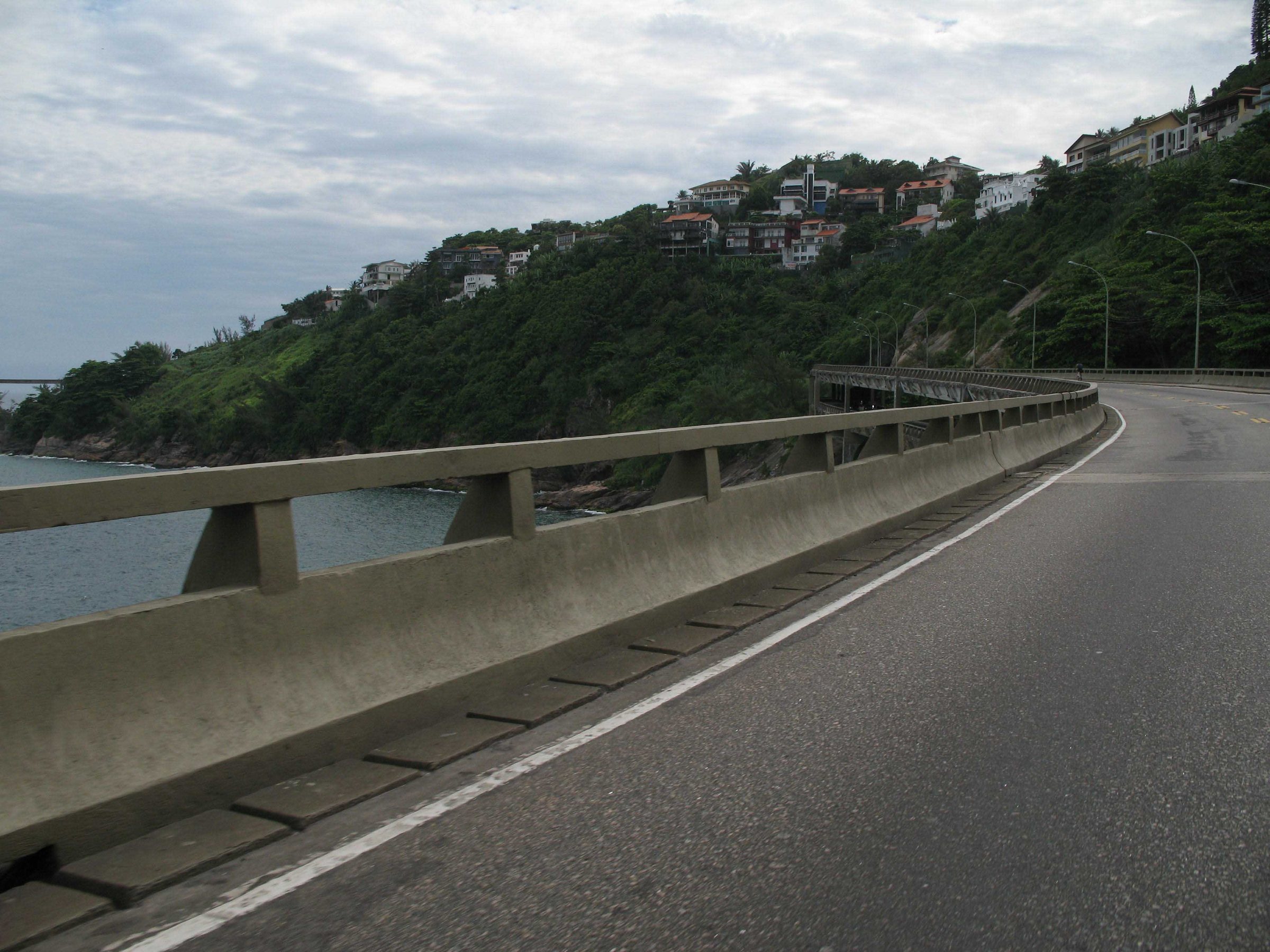
The name
Even the name is uncertain, and honesty requires saying so. The most-repeated account traces "Joá" to the neighboring hill, the Morro da Joatinga, and from there to the Tupi yuá-tinga — roughly, "muddy" and "whitish" — with "Joá" as the worn-down short form. A competing story, told with equal confidence, credits a former resident: a Frenchman named Anchois whose surname the locals pronounced Chuá. Both are folk etymologies; neither is settled. It is fitting for a place this private that no one can quite agree how it got its name.
The mountain that came first
The geography is not uncertain at all. Joá is draped over the Morro da Joatinga, between the Atlantic and the rock, at the southern edge of the Tijuca massif — the vast urban remnant of Atlantic Forest that the Tijuca National Park protects. Above it stands the Pedra da Gávea: eight hundred and forty-two metres of granite, its flat summit and sheer seaward face visible from half the western coast, so large it is often described — with the usual tourist licence — as the biggest block of rock rising straight from the sea anywhere on earth. It is the backdrop to every house in Joá and the reason the light here is the way it is: the mountain holds the afternoon and hands the neighborhood a long, gold end to the day.
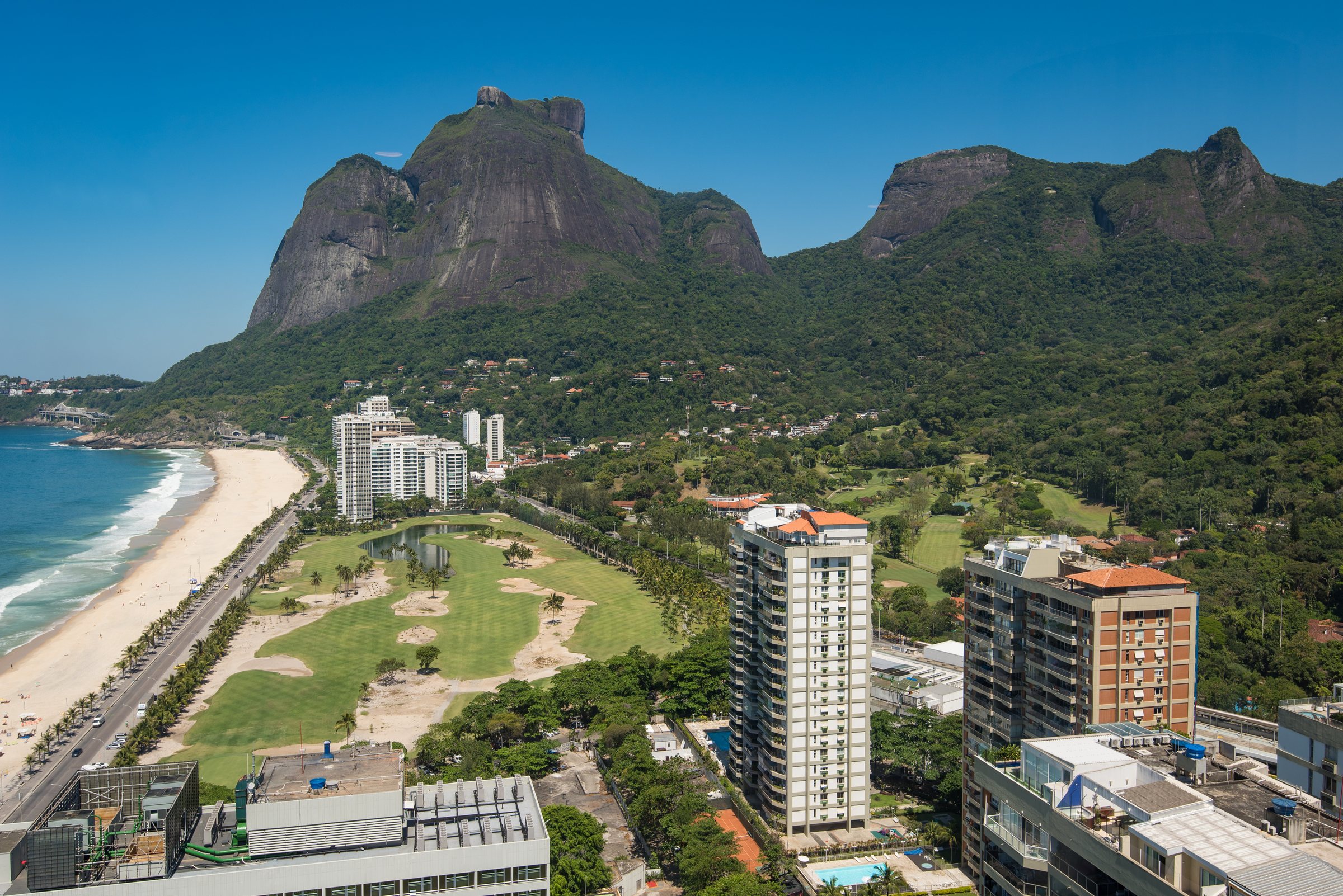
The rock that watches the hill.
At the edge of a national park, the Gávea gives Joá two things money can't manufacture: a wall of protected forest behind the houses that will never be built on, and a view that arrives already framed. The mansions hide in the mata; the mountain does the rest.
The road that made it possible
A cliff is only an address once you can reach it. Joá's turning point was the Elevado do Joá — officially the Elevado das Bandeiras — the elevated highway that carries the coast road out over the rock between São Conrado and Barra da Tijuca. Construction began in 1967 and it opened in 1971, stitching the far western beaches to the Zona Sul for the first time and turning Joá from a dead end into a place on the way to somewhere. A second, parallel structure was added and completed in 2016, and the complex now runs a little over three kilometres, threading its own tunnels — the Túnel do Joá among them — through the headland.
A common confusion is worth clearing up, because it appears even in careful writing about the area. The elevated highway was not renamed after Tim Maia. What carries the singer's name is the Ciclovia Tim Maia — the seaside cycle path, part of which runs along the upper deck of the elevado, opened in 2016. It honours Tim Maia's 1986 song "Do Leme ao Pontal," because the finished path traces exactly that route along the coast. The road is the Bandeiras; the bike lane is Tim Maia. The distinction matters if you want to get Joá right.
The tunnel, and the name it carries
The other name on the approach to Joá belongs to a darker chapter of the country's history. The tunnel system linking Gávea to São Conrado — the way most residents drive toward the Zona Sul — carries the name of Zuzu Angel, the fashion designer Zuleika Angel Jones. In 1971, her son Stuart, a student activist, was arrested and tortured to death by agents of the military dictatorship. Zuzu spent the rest of her life campaigning to expose his killing. On the 14th of April 1976 — five years to the day after her son's arrest — she died when her car went off the road at an exit of the tunnel that now bears her name.
The official account said she fell asleep at the wheel. Almost no one believed it, least of all Zuzu, who had left a letter with friends stating that if she turned up dead "by accident or other means," it would be the work of her son's killers. In the decades since, investigations have concluded her death was a deliberate attack, and in 2025 her death certificate was formally corrected to reflect the dictatorship's responsibility. Drivers pass through the tunnel without a thought; the name is a small, permanent memorial on the road into the most sheltered neighborhood in Rio.
“The forest closes the plots from behind; the cliffs close them from below.”
A club shaped like a ship
Joá acquired its social anchor before it acquired most of its houses. In 1962, on the Ponta do Marisco at the tip of the Joatinga headland, the architect brothers Ricardo and Renato Menescal built the Clube Costa Brava — conceived, deliberately, to look like a ship run aground among the rocks, prow to the sea. It became a fixture of carioca social life and is now heritage-listed by the city. Long before the drone shots and the R$250-million listings, the club was the sign that this improbable strip of cliff had decided to become somewhere.
The neighborhood it became — and the line it holds
What grew on the cliff is deliberately unlike the rest of Rio. Joá has no towers, no commerce, no through-traffic and no internal bus line; fewer than a thousand people live across its square kilometre and a half, in houses set into gated condominiums on the hillside. That restraint is not entirely voluntary, and it is not always kept. In 2024 the city demolished four luxury mansions built illegally on protected land here — a reminder that the same scarcity that makes Joá valuable also makes every extra square metre a temptation, and that the line between the neighborhood and the forest is one the authorities still have to enforce.
That tension is, in the end, what Joá is: a fortune built on a mountain that was never quite meant to be built on, holding the line between the city and the rainforest, between visibility and disappearance. A road made it reachable. The people who came kept it as unreachable as they could. Both things are still true.
Who those people are today — the roster the press reports on the hill — is its own page: Who Lives in Joá.