There are cities for the easy wedding — a straight line from the church door to the reception table, the same thirty guests who have been at each other's weddings for a decade, a band that knows the songs. Rio is not one of them. A wedding in Rio is a four-day event, not a four-hour ceremony. You arrive on a Thursday; there is a dinner at Aprazível on the Friday, a welcome drink at the Copacabana Palace bar at sunset, a ceremony somewhere improbable on the Saturday, a long Sunday lunch on the beach, and a farewell breakfast on the Monday that everyone who matters still stays for. The city does this for a reason. Cariocas understand that the wedding is not the ceremony; the wedding is the weekend.
Joá Rio is published from ADV101, a five-suite villa in Joá offered at R$ 15,000,000, shown privately by appointment through Art de Vivre.
Ask about a viewing on WhatsAppWhat follows is a guide to marrying across a Rio weekend, not a single day. It is written for couples who have already made the decision — this is not a manifesto about why Rio; that argument makes itself the first time you watch a ceremony in the garden at Parque Lage, Corcovado watching too. The rest is logistics, and the logistics in Rio are more complex than in a European capital or a Caribbean island. That is what a guide is for.
I. The venues, in five tiers
Rio does not want for places to get married. The problem is the opposite — a surplus of cinematic locations, each with its own permit schedule, its own capacity, its own politics. The five settings below cover the overwhelming majority of the weddings I have watched in this city.
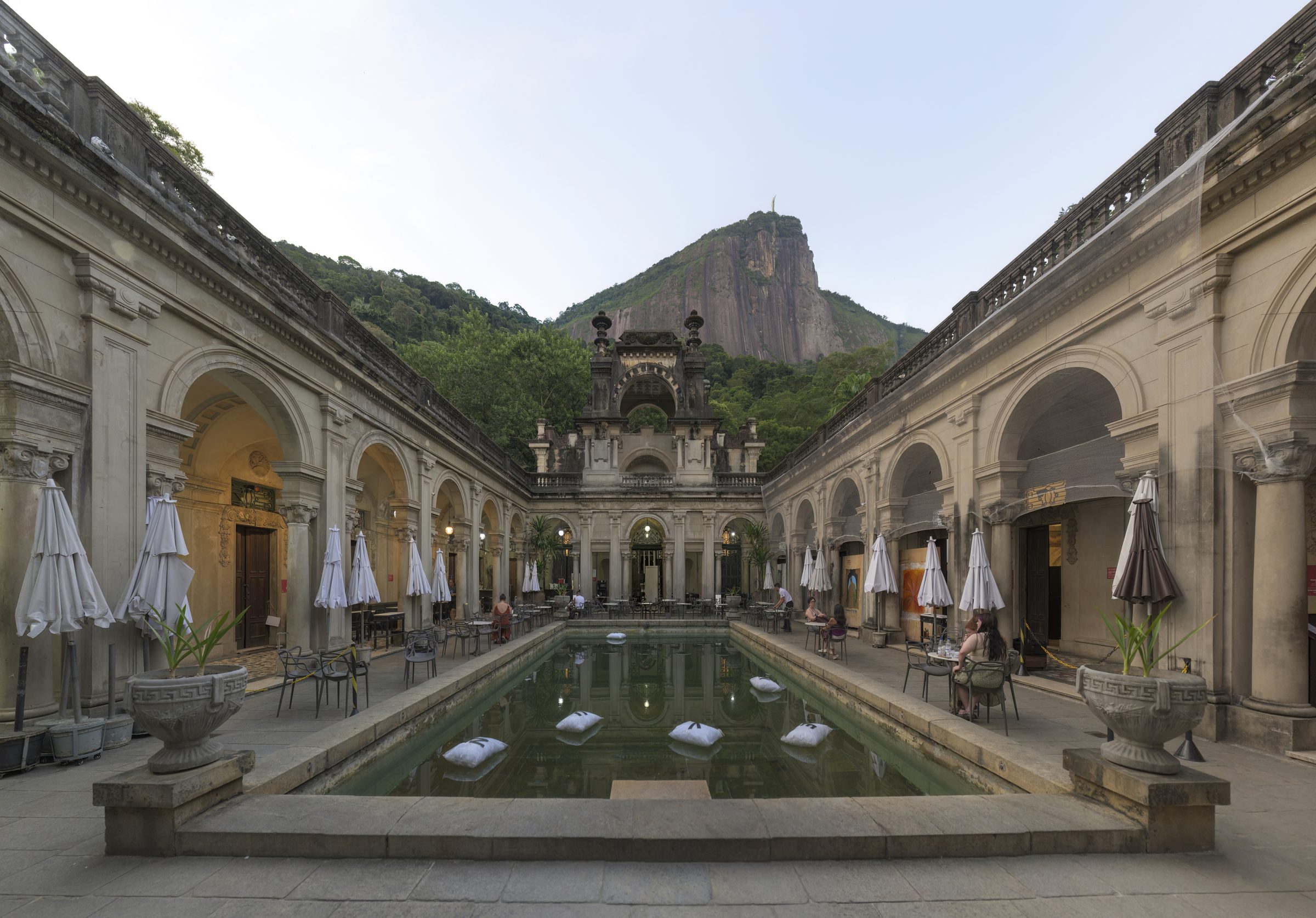
Parque Lage. The most requested civil-ceremony venue in the Zona Sul. An Italianate mansion (early twentieth century, Mario Vodret) on the grounds of what is now the School of Visual Arts, with a colonnaded central courtyard built around a single rectangular swimming pool. Corcovado is visible directly above the courtyard. The ceremony takes place beside the pool, under the sky; the reception moves to the galleries on the first floor, where the walls are hung with work from the students of the school. Capacity: around 180 for a seated reception, 350 standing. Events require a permit through the Instituto Municipal de Turismo and tend to be booked six to nine months out. A licensed caterer list is published; your planner will have worked with most of them.
The Copacabana Palace. The city's grand hotel, a hundred years old, a ballroom that has seen almost every wedding that mattered in twentieth-century Rio. Three principal rooms: the Salão Nobre (2,400 square feet, Versailles-scale chandeliers, capacity 200 seated); the Salão Golden Room (larger, art deco, with a small stage at one end); and the piscina — the pool courtyard itself, for couples who want an open-air reception under the palm trees, with the hotel facade lit behind them. The Palace will produce everything — catering, florals, staffing — through its house teams, which is the easy route and, for a five-star Copacabana ceremony, the one most couples take. Capacity on the pool deck: 400 seated, 600 standing. Book twelve months out.
The Jardim Botânico. For couples who want the ceremony itself to be the image — the alley of royal palms at the entrance to the gardens, two hundred metres long, the trees ninety years old — a wedding in the Jardim Botânico is the cinematographer's dream. It is also the most regulated location in this list: a permit is required through the Instituto de Pesquisas Jardim Botânico, capacity is limited to around 120 under the current rules, and the service provider list is short. The garden closes to visitors at 5 p.m., and a wedding under the palm alley tends to begin at 4:30 and conclude by 6:30, with the reception moving to Parque Lage a short drive away or to a private residence. If the ceremony is the priority, the alley is unmatched in South America.
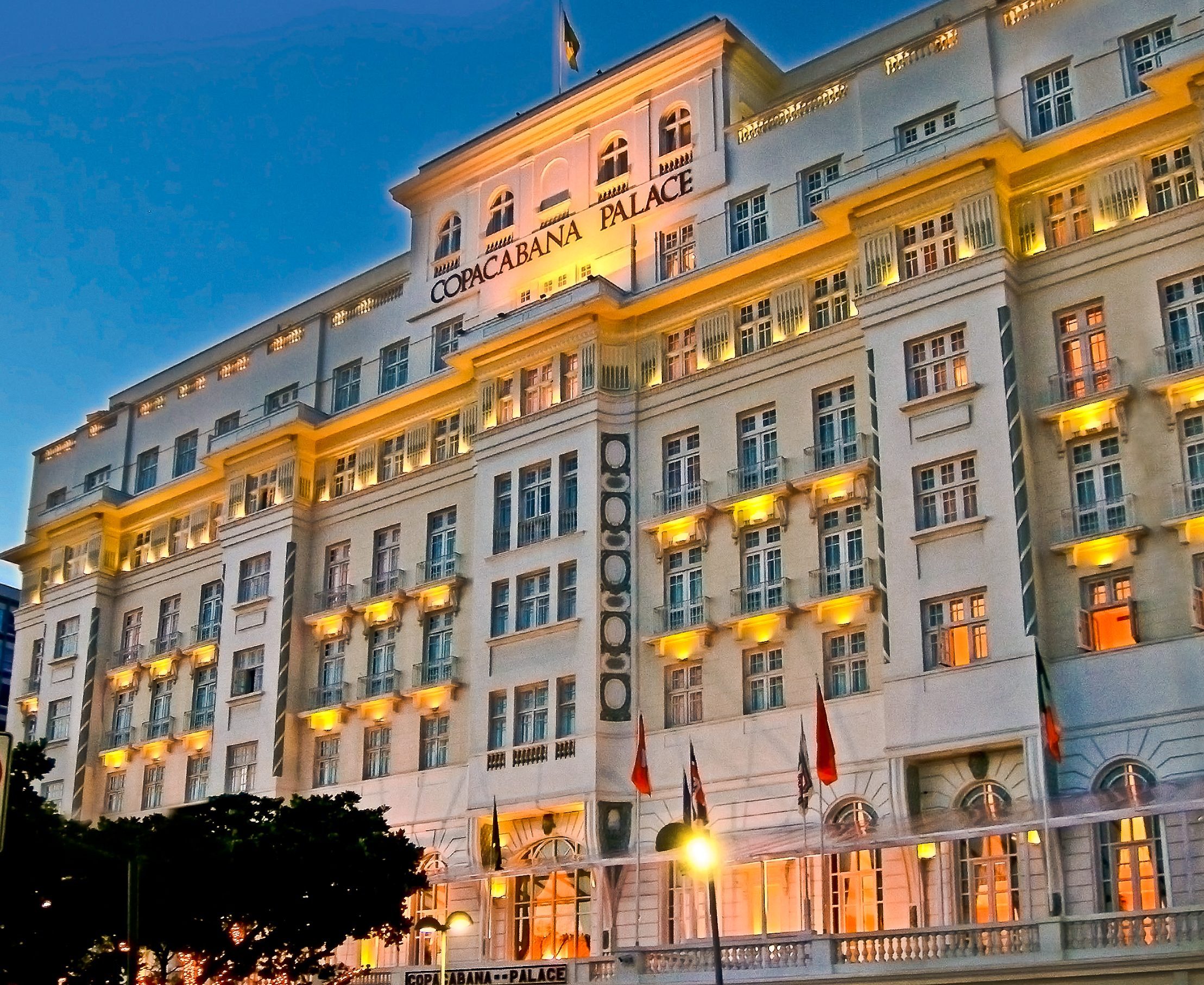
A ballroom a hundred years old. Still the first call.
The Copacabana Palace has hosted weddings through the Golden Age of the Brazilian monarchy in exile, the military regime, the stabilisation plan, the Olympics, the pandemic, and the decade since. The house staff have run five hundred of them in their heads before yours. Your planner will liaise with a single production contact — ask for the catering director's personal line and insist on a final walk-through the morning of.
II. Two more venues you should know
The Fasano rooftop. The Hotel Fasano Ipanema has a small rooftop terrace with an infinity pool over the beach and views running from Arpoador to Leblon. It is not a large-format wedding venue — the maximum comfortable capacity is around 90 — but for a seated dinner of twelve at a single long table, with the sun going down through the Dois Irmãos rock, the Fasano is the best dinner venue in the city. It is the room I book for welcome dinners, not for the wedding itself, but it is also the only rooftop in Rio that will let you have the whole thing.
The Joá house. A wedding of twelve, thirty, or sixty guests can be run out of a private residence, and the cliffside villas of Joá — this house among them — are a short list of the options. A ceremony on the infinity-pool terrace with the Atlantic behind; a seated dinner in the dining room for twelve, or on the pool deck for thirty; a late-night at the home bar. Villa weddings are not cheap — the logistics are private, the staffing is one-to-one, the permitting sits on you — but for a very small, very quiet wedding, they are unmatched for control and for privacy. Photographers love Joá for the reason the neighbourhood exists: the cliff, the sea, the fact that the ocean is the wall behind the ceremony.
Búzios. A destination within a destination — the fishing village two and a half hours up the coast, made famous by Brigitte Bardot in 1964 and now a beach-town of 25,000 that specialises in small private weddings. The pousadas on Praia da Azeda, the boutique hotels on the Orla Bardot promenade, a beach ceremony at dusk with a catered dinner moving into the main room. Many of my couples who are already coming to Rio for a weekend add a Búzios wedding as the mid-point of the trip — a three-day honeymoon opening, so to speak. See the "Beyond Rio" journal entry for more on how to use the town.
“The wedding is not the ceremony; the wedding is the weekend.”
III. Season, date, weather
The best wedding months in Rio are May, June, July, August, September — the dry southern winter and spring. Days run in the low-to-mid twenties Celsius (high-seventies Fahrenheit); nights dip to a pleasant eighteen. Rain is rare, and an outdoor ceremony is a safer bet than it would be in January. October and November are the transitional months — warmer, wetter in the late afternoon, still very workable for a Saturday morning ceremony. March and April are the shoulder of the summer — warm, humid, occasional storms, but also reliably photogenic.
The one window to avoid is the first two weeks of January — the city is in New Year recovery, half the staff is on holiday, and the hotels are booked three years out at higher rates. Carnival week (variable; usually late February or early March) is the other off-limits window: the city is not empty, it is differently occupied, and the hotels in Zona Sul are operating at capacity for a different event.
A weekday wedding — Wednesday or Thursday — will save you 20 to 30 per cent on venue hire and put the guests in a more festive mood than a Saturday, when the city itself is also competing for their attention. I recommend a Thursday or Friday for a Rio wedding of fewer than 120 guests.
IV. Paperwork, honestly
A legal civil marriage in Brazil is open to foreigners, and the Rio civil registry (the Cartório de Registro Civil das Pessoas Naturais) will marry two non-residents after a series of pre-filings. The paperwork is neither fast nor intuitive: a consular certificate of no impediment from each party's country of origin, a translated and apostilled birth certificate, a personal interview with the registrar, a thirty-day public notice. Total elapsed time: around six weeks, assuming everything arrives on time. A Brazilian civil marriage is recognised in most jurisdictions under the Hague Convention.
Most of my foreign couples do not do this. The more common pattern is a civil ceremony at home — in front of a judge or registrar in your own city, a week before or a week after the Brazilian trip — and a symbolic ceremony in Rio: officiated by a celebrant or friend, legally non-binding, and therefore freed from the paperwork. The guests never know the difference, and the emotional weight of the ceremony is unchanged. If the ceremony matters for reasons of faith — a Catholic nuptial mass, say, at the Capela Santo Antônio in Copacabana — the parish will coordinate with your home church and a Brazilian civil filing is not required.
A small note on names: Brazilian convention is for the bride to adopt the husband's surname, or to hyphenate, and neither is required. International couples can keep their names as they arrive.
V. The team
A Rio wedding should be run by a local planner — not a home-based planner on a Zoom. The vendor ecosystem in this city is small, relationship-driven, and opaque to outsiders; a planner who has worked fifty weddings here in the last five years will get you a better florist at a better rate and, critically, will get the dossier of permits, certificates, and licences right. There are perhaps eight planners in the city whose portfolio and judgement I trust; we route most couples to two.
Photography in Rio is a specialised discipline because of the light. The city's best wedding photographers shoot in the carioca hour — the forty minutes before sunset — and work with assistants who know which rock at Arpoador will be free at 5:40 p.m., which terrace at the Palace catches the gold, which corner of Parque Lage does not have a tourist in the frame. Expect a senior photographer for 12 hours at roughly the cost of a good European wedding photographer for 10 — the work, by my eye, is the equal of anyone's in Europe.
Music. The serious option is live samba and choro — a small acoustic ensemble for the ceremony and cocktail hour, a larger band for the reception. For a sunset ceremony, a single bossa-nova guitarist and a singer covering Jobim and Toquinho is the image. For the reception, a ten-piece samba band from one of the Zona Norte samba schools (Mangueira, Portela, Salgueiro) will carry the night until five in the morning if you let them. DJs are used in Rio mostly for the late-night set after 1 a.m.; the first half of the reception is almost always live.
Food. Three serious caterers cover most serious weddings in this city — Mariana Laufer Events, Zest Gastronomia, and the Copacabana Palace's own catering arm. Your planner will have opinions; trust them. The food at a Rio wedding is typically served as a long series of small plates through the cocktail hour and a three-course plated dinner, not a buffet — buffets are a São Paulo preference.
VI. A weekend, not a day
The best Rio weddings I have watched have used the full weekend. Thursday: welcome drinks at the Copacabana Palace pool bar for guests who have already arrived; a small family dinner at Olympe or Oteque for the immediate party. Friday: a beach day at Ipanema Posto 9 — reserve chairs through the hotel — with a lunch at the Arpoador kiosks; a welcome dinner at Aprazível in Santa Teresa with the bay below and a live choro trio. Saturday: the ceremony and reception. Sunday: a long lunch at Sud O Pássaro Verde or at the Palace, followed by a walk from Leblon to Arpoador at the carioca hour for the last photos. Monday: a farewell breakfast at the house or the hotel for the guests who are still around.
The cost of extending a wedding in this way is almost entirely a function of the venues you use for the peripheral events — and in Rio, the peripheral venues (the Palace pool bar, Aprazível, the kiosks at Arpoador) are inexpensive by international standards. A four-day Rio wedding weekend for 80 guests, with a ceremony at Parque Lage and a reception at the Palace, can be done for less than a one-day wedding of the same scale in London or New York.
VII. What the house can do
The Joá Rio villa is a five-suite house; it can host the wedding party, the immediate family, or the couple themselves through the run-up to the wedding and the honeymoon. The infinity pool on the edge of the cliff, with the Atlantic spreading to the horizon, is also a small ceremony location — thirty guests maximum, but a ceremony here reads, in a photograph, like something from a Conde Nast spread. Our concierge does not plan weddings — the ecosystem is specialised, as noted — but we do partner with three of the city's best wedding planners and can broker introductions for couples considering the house as a venue or as a residence for the weekend.
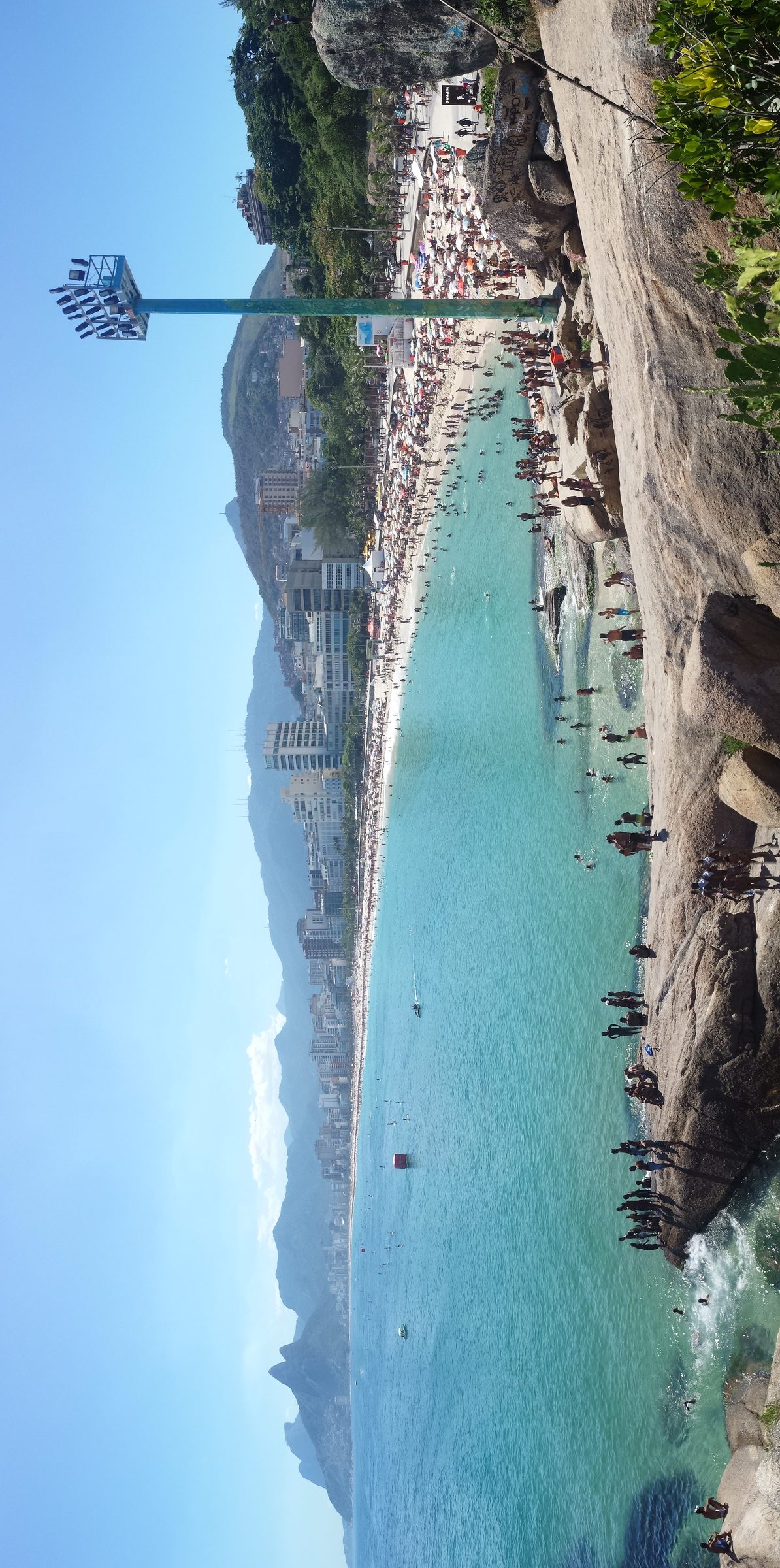
The house also sits inside Joá: the Beverly Hills of Rio, a closed condominium with 24-hour security, a single gated access road, and the most private beach in the city — Praia da Joatinga, reached on foot through a carved passage in the rock. For couples who value privacy, the neighbourhood is not a trade-off; it is the reason.
VIII. The photographs you will keep
After enough weddings, you notice a pattern in which frames end up on the mantelpiece. The Rio wedding frame that lasts is rarely the ceremony — the ceremony looks like a ceremony, from New York or from Provence. The frame that lasts is the moment around the ceremony: the bride on a balcony at the Palace before the walk, the bay behind her through a pair of open French doors; the couple on the Parque Lage stairs with Corcovado directly above them, neither of them looking at the camera; the Sunday lunch at Ipanema, a group of twenty at a long table outside a kiosk, the sun setting through Dois Irmãos, the wine glasses catching the light. A good Rio photographer is hunting these frames. Let them.
A Rio wedding makes a quiet case: that a wedding is better as a weekend than as a day, that the city will do some of the work if you let it, and that a long, unhurried Sunday lunch is, in the end, worth more than a perfect first dance. Marry here and you have said yes twice — once to the person, and once to a way of being a couple, out in the world, at a long table, for a long afternoon. We think it's the right yes.