The city of Rio de Janeiro has, by the most generous municipal count, seventy-two named beaches on its Atlantic front. Some are four kilometres of continuous curve, some are the width of a drawing-room between two rocks, and some have names only the neighbours use. To a carioca, the beach is not a day trip. It is a piece of civic furniture — a living room, a meeting place, a gym, a market, a second office, and, on a Saturday, the setting of the only meeting of the day that matters. A visitor who spends a week in Rio and does not spend an afternoon on the sand has, in some carioca sense, skipped the city. A visitor who spends a week and tries only Copacabana has opened the first page.
Joá Rio is published from ADV101, a five-suite villa in Joá offered at R$ 15,000,000, shown privately by appointment through Art de Vivre.
Ask about a viewing on WhatsAppWhat follows is a guide to the city's coast, organised by character rather than by geography — the four most famous, the four most secret, the weekend beach the locals keep for themselves, and the further-out beaches a visitor will only find with a car and a morning to spare. Each entry tells you who goes, when to go, and how to use the place once you're there. At the end, a short section on how a carioca actually spends a beach day — which, it will surprise no one, is not how a European uses a beach.

I. The famous four
Copacabana. Four kilometres of arc from the Leme rock at the north end to the Copacabana Fort at the south, the most-known stretch of sand in the country and, arguably, in the world. The Portuguese wave pavement — laid by Roberto Burle Marx in 1970, a black- and-white calçadão pattern that reads like a landscape sketch from the air — runs the whole length. Copacabana is more populist than Ipanema, more crowded, and louder. Posto 2 is where the tourists cluster; Posto 4 is the middle-aged beach; Posto 6, near the Fort, is the older, quieter local end, with beach volleyball courts that have been in continuous use since the seventies. Go early (seven to ten), or in the late afternoon (four to seven). The heat between noon and three is honest and the shade is limited.
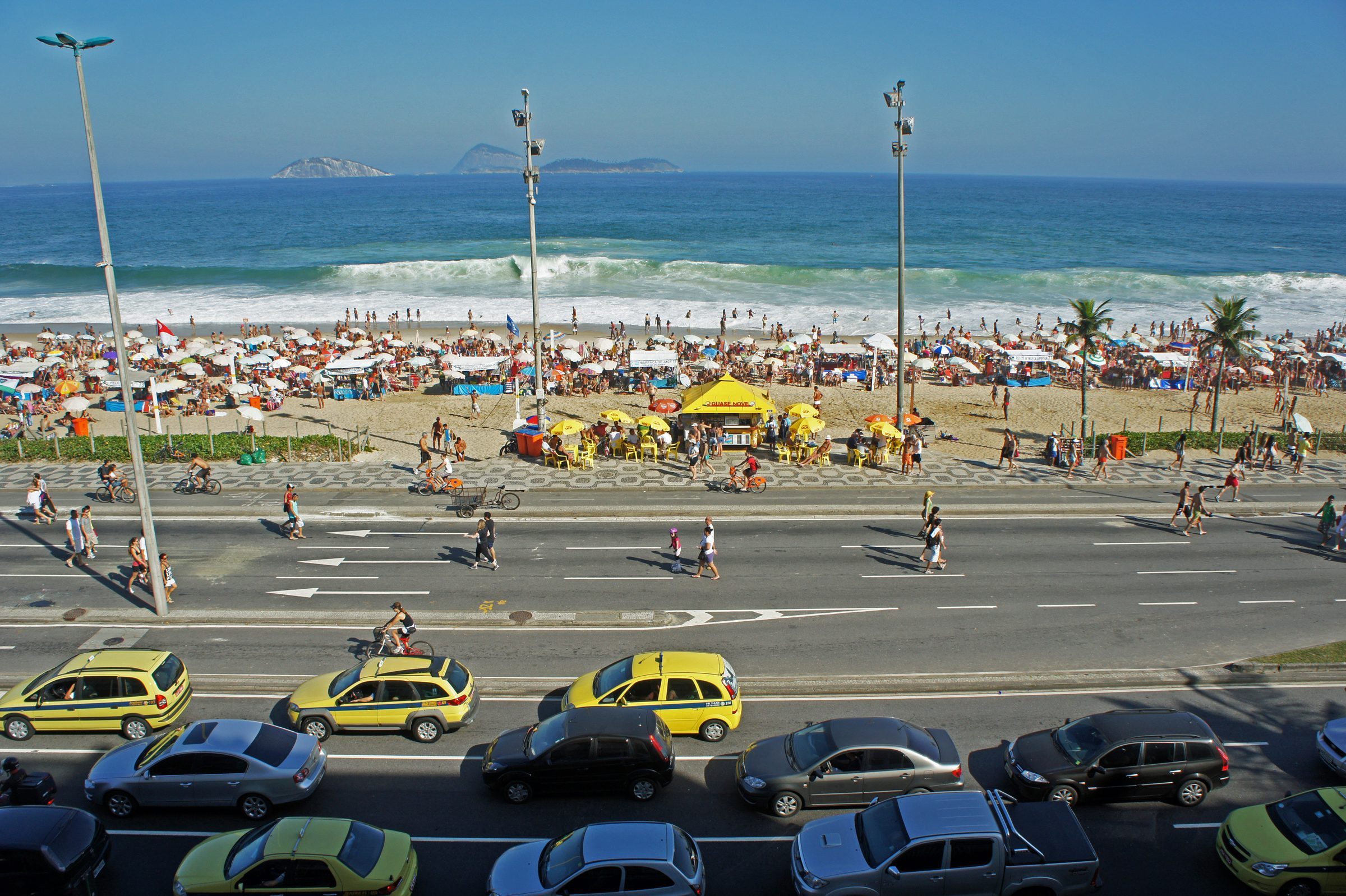
Ipanema. Two kilometres of beach between the Arpoador rock and Leblon, the sharper-dressed, more fashionable sister to Copacabana. Ipanema is organised by posto: each lifeguard station is a social sub-neighbourhood with a distinct crowd. Posto 7, at the Arpoador end, is surfers at dawn and spectators at sunset. Posto 8 skews gay. Posto 9 is the carioca living room — intellectuals, journalists, architects, the kids of the Zona Sul's professional class. Posto 10 is families. Arrive, pick your posto, and do not wander. The social geography is close to a seating chart.
Leblon. One kilometre of beach from the Jardim de Alah — a slim park that separates it from Ipanema — to the Dois Irmãos rock. The quieter, wealthier neighbour, with shorter waves, better swimming, and a more relaxed atmosphere. The only beach in Rio with a dedicated children's area — Baixo Bebê, at the Avenida Delfim Moreira end — where the calçadão widens for stroller traffic. Leblon's kiosks are the best-run in the city, stocked by the nearby hotels and fussier about ice.
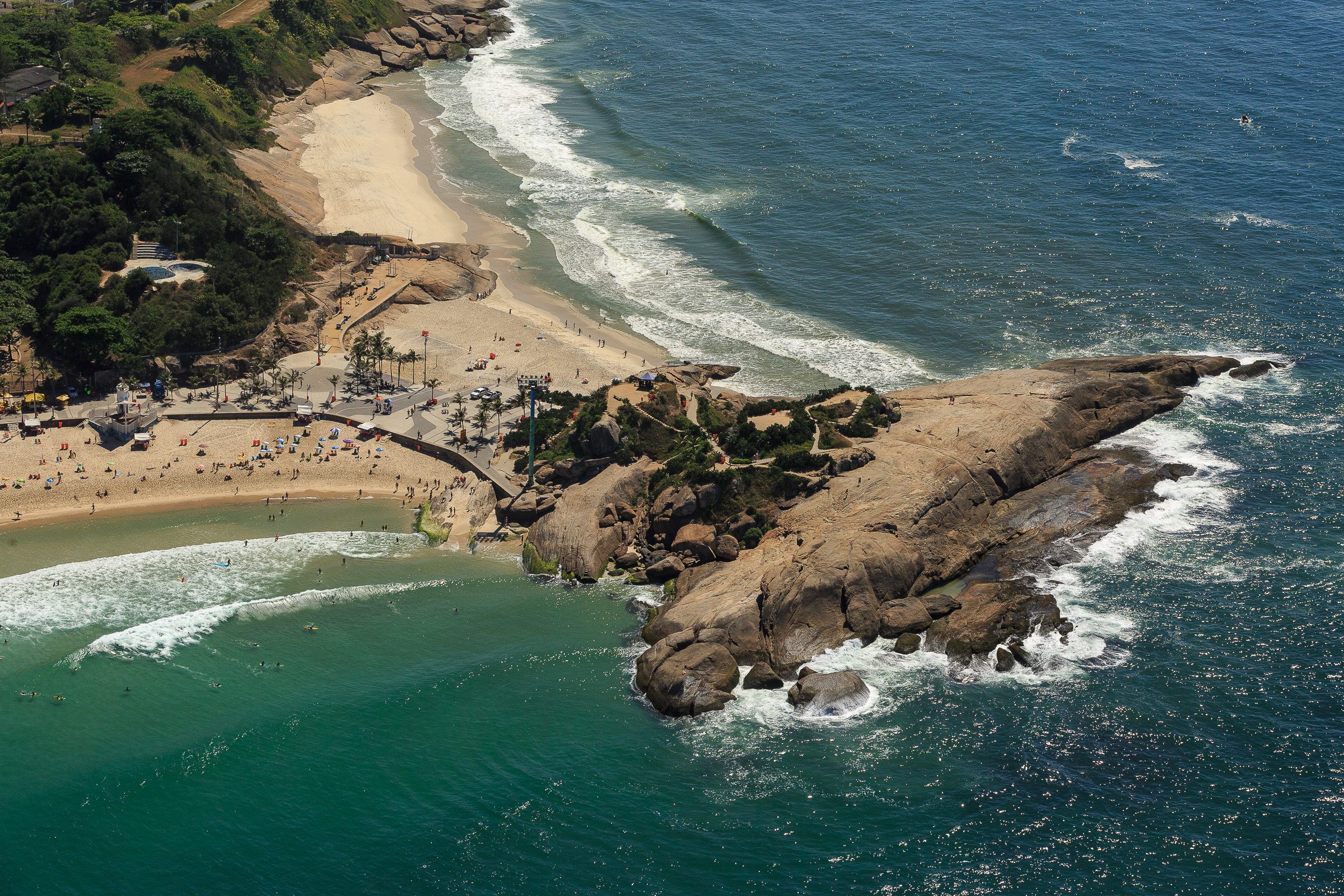
Arpoador. The rock between Ipanema and Copacabana, and the tiny beach folded against it — perhaps two hundred metres of sand. Arpoador is a surf spot (the name means harpoon, for the whaling that happened here three centuries ago) with a morning break and an evening ritual. At sunset, cariocas and visitors both climb the rock — flat on top, unfenced, a bolt-field left by local scramblers — to watch the sun go down behind Dois Irmãos. When it does, the rock applauds. You will be clapping without deciding to.
Go mid-week. Go late afternoon.
The Ipanema beach of the postcard — tanned bodies, thin swimsuits, long conversations — is not a weekend beach. On a Saturday it is a family outing, a public spectacle, a thousand children with footballs. The Ipanema of the imagination lives on a Thursday at four, when the postos empty of the lunch crowd and the afternoon light flattens the sea. Sit at Posto 9. Order a coconut. Watch the city arrive.
II. The secret four
Praia da Joatinga. The private cove inside the Joá neighbourhood, reached on foot through a carved passage in the rock. No kiosks, no vendors, no lifeguards — a small arc of sand under the cliffs of the Joá peninsula, with the forest pressing down from above and the ocean opening west. The beach is best at mid-tide; at high tide there is almost no sand, and at low tide the rocks at each end emerge as small swimming platforms. It is the closest thing Rio has to a private beach. Bring water.
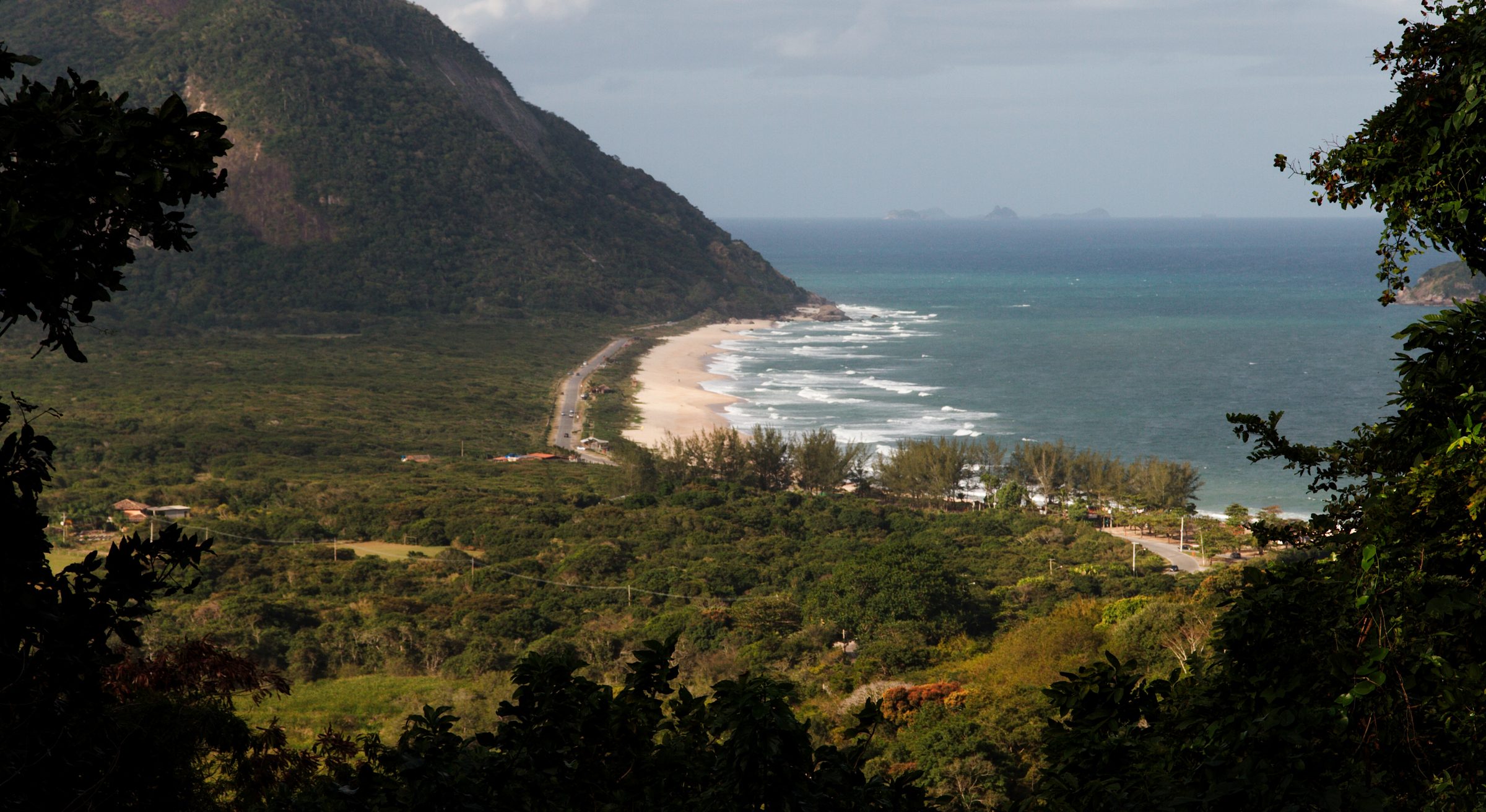
Grumari. Forty minutes west of Ipanema by car, inside the Área de Proteção Ambiental de Grumari, a protected rainforest reserve on the Atlantic coast. No buildings, no kiosks permitted; the rainforest runs down to the sand. A string of small beaches — Grumari itself, Praia do Abricó (Rio's only legal nudist beach), Praia do Perigoso, Praia do Meio — each reached from a single coast road. The rental of a chair and an umbrella, from a concessionary, is the only infrastructure. For a Sunday morning drive and a long, unhurried day, Grumari is unmatched.
Prainha. The small beach — prainha means "little beach" — that hides between two headlands on the Recreio dos Bandeirantes side of Grumari. A sheer drop into a single perfect arc of sand with a reliable surf break and a cult following among the city's surfers. On a clear Wednesday morning, you will share the beach with the locals; on a Sunday, it crowds. Arrive by 9 a.m. for a good spot.
Praia Vermelha. The "red beach" — named for the colour of the sand at sunset — tucked between the Pão de Açúcar and the Morro da Urca, on the bay side of the Sugarloaf mountain. A short curve of sand with the two mountains framing the view. The water is calmer than on the ocean beaches; the beach itself is a local favourite for a family Sunday and a runners' staging point for the Pista Cláudio Coutinho, the path that circles the base of the Sugarloaf through the Atlantic rainforest. A half-day beach, not a whole day.
“The beach is not a day trip. It is a piece of civic furniture.”
III. The further beaches
Barra da Tijuca. Eighteen kilometres of beach — the longest continuous stretch of sand in the city, running along the Zona Oeste from the Barra da Tijuca condominium towers to the Recreio dos Bandeirantes. The tone changes along its length. The Posto 1 end, nearest the towers, is the family beach — a thick ribbon of white sand with a wide boardwalk. The Pepê section, near Avenida do Pepê, is Rio's kitesurfing and windsurfing beach — the wind here is reliable, the equipment rentals well-organised. The Quebramar at the far end is the surfers' wall — a rock groyne with a consistent left-hander, and a culture of its own.
Recreio. Beyond Barra, a narrower beach with a stronger surf break and a quieter neighbourhood culture. Recreio is where the city's senior surf instructors live; a lesson here — two hours, English-speaking instructor — is the standard introduction to surfing in the city.
Praia do Pepino. The landing strip, not the starting point. The hang-gliders who launch from Pedra Bonita, above São Conrado, glide a kilometre through the air and land at Pepino — a thin beach of pale sand at the foot of the São Conrado headland. A beach to arrive on, not a beach to lie on. If a guest is game to fly, we book the tandem flight (the pilots are professional, with a decades-long safety record), and the beach becomes, briefly, the best landing on earth.
IV. The bay beaches
Rio faces two waters: the open Atlantic to the south, and Guanabara Bay to the east. The bay beaches are calmer, shallower, and used more for strolling than for swimming. Flamengo, on the Aterro do Flamengo, is the longest — a 3.5-kilometre curve of sand inside the bay, with a wide promenade designed by Burle Marx and a backdrop of the Sugarloaf. Cariocas run here at dusk. The swimming is not advised (bay water quality is variable), but a sunset walk from the Glória marina to Botafogo is one of the city's quiet pleasures. Botafogo, at the inner end of the bay, is a narrow strip with one of the best views in the city: Pão de Açúcar rising directly from the water on the far side. Sit at the old Botafogo yacht club at five and you will understand why the neighbourhood is the most expensive piece of waterfront real estate in Rio.
Urca. The tiny residential neighbourhood at the foot of the Sugarloaf, with a small beach and a very small sea wall (mureta da Urca) that the whole of Zona Sul uses as a Thursday-night drinks bar. The beach is a hundred metres of sand between the yacht club and the Praia Vermelha; the sea wall, a low stone bench running along the waterfront road, is where you buy a beer from a trolley vendor and sit facing the bay with everyone under thirty-five in Rio on either side of you. It is the best free evening in the city.
V. How a carioca uses a beach
Rio has a rhythm on the sand that is worth learning because it is different from the European rhythm and from the American.
The arrival. A carioca does not carry a towel. They carry a canga — a thin printed cotton sarong, folded small, doubling as a towel, a dress, a sheet. They carry a plastic folding chair, a water bottle, a pair of sunglasses, and their swimwear already on underneath. They do not carry food. They do not carry a cooler.
The kiosk. The infrastructure of a Rio beach is the quiosque — a concessioned wooden kiosk built into the boardwalk every two hundred metres along Copacabana, Ipanema, and Leblon. Each kiosk rents chairs and umbrellas for the day (R$20 each is standard in 2026) and serves cold beer, sweet caipirinhas, coconut water direct from the green nut (água de coco, R$12), and small plates: grilled cheese on a stick, a tapioca with cheese and ham, a whole fried fish with a plate of rice. If you settle at a posto, you have a kiosk. The staff will recognise you by the second day.
The vendors. A moving market circulates across the sand between nine and four. Popsicles (picolé) in a polystyrene box carried by a man who sings his inventory; mate, the iced tea, in a steel canister with a canvas strap; shrimp on a stick, grilled to order on a rigged coal basket; a woman selling prints and sarongs; a man selling Havaianas in every colour. The price is never what they say first; it is never much less, either. Buy the popsicle. Buy the mate. Wave off the sarong-man politely.
The swim. A carioca swims briefly. The ocean is not warm by Caribbean standards — the Atlantic here runs 22 to 25 Celsius in summer, 18 to 22 in winter — and the undertow on the ocean beaches is real. The red flag at a lifeguard post means do not swim; the yellow flag means swim with care; the green flag means the surf is reasonable. The lifeguards are serious. A swim of ten minutes between waves, a long lie on the sand, and a slow walk to the shower is the pattern. European-style long swims are uncommon outside the calm-water beaches (Leblon, Urca, Praia Vermelha).
The sunset. The beach day ends with the sun. A carioca does not leave before; the one exception is a late lunch day, in which case the beach is Saturday from noon to three and the sunset happens elsewhere. At the three beach-applause locations — Arpoador, the Mirante do Leblon, the Pedra do Arpoador — the crowd stands when the sun drops. You should too.
VI. When to go, in detail
The ocean beaches of the Zona Sul are year-round beaches, but the feel changes. December through March is summer: hot, humid, crowded, party-pitched. The sand at Posto 9 on a January Sunday is a spectacle; it is also a little overwhelming. April through June is the carioca local's favourite season — mid-seventies, blue, the water still warm from the summer, a drop in crowds. July and August is winter in the southern hemisphere: pleasant mid-seventies days, slightly cooler water, the lightest beach crowds of the year. The September and October shoulder brings spring — the water warming again, the weather stabilising, a quiet window before the Christmas high season.
Within a day, the best beach hours are 7 to 10 a.m. and 3 to 7 p.m. The midday heat is intense even in winter and the UV index approaches ten. Cariocas stay out of the sun between noon and three; so should you.
VII. A very short honour roll
The beaches I have not covered at length, but which deserve a mention: Praia do Diabo (a 300-metre cove between Arpoador and the Copacabana fort — the surfers' beach, no facilities); Leme (the end of Copacabana, nearest the rock — the fishermen's beach, very early mornings); Macumba (a long-board surf beach past Recreio, culturally distinct); Praia do Pepê (already mentioned under Barra, but worth its own name for the kitesurf scene); and Praia dos Amores at Urca, a pocket of pale sand tucked behind the yacht club that only appears at low tide — a local secret, easily missed.
And one more, outside Rio itself. Praia da Azeda in Búzios — two and a half hours up the coast — is the Caribbean beach the rest of this list hints at and never quite delivers. If your trip has room for a weekend away, take it. The "Beyond Rio" journal entry has more.
The city's coast is not a checklist. It is a place the city lives, a mood, a Saturday. Go in the morning to the empty end of Copacabana. Go at five to Ipanema Posto 9. Drive out to Grumari one Sunday and back. Walk from Leblon to Arpoador at the carioca hour, once, so that you can say you did. The beach in Rio is not the point of the day. It is the day.