Salt air is patient. It does not do anything dramatic on the day you move in. It works on a house the way water works on rock — slowly, everywhere at once, and only on the things that were not chosen for it. Every oceanfront house that still looks right after a decade looks right because somebody made a series of unglamorous decisions about metal, glass and sealant before the first slab was poured.
Joá Rio is published from ADV101, a five-suite villa in Joá offered at R$ 15,000,000, shown privately by appointment through Art de Vivre.
Ask about a viewing on WhatsApp
What the salt actually does
Sea spray carries chloride. Chloride sits on a surface, attracts moisture out of the air, and holds a thin damp film against the material for far longer than rain would. On steel that film breaks down the passive oxide layer and rust starts underneath. On aluminium it pits. On untreated timber it accelerates everything the sun is already doing. On glass it does nothing at all, which is why glass houses on the ocean work.
The distance from the water matters enormously. A house on the second row behind another building lives in a different environment from a house on an exposed cliff taking the wind straight off the Atlantic. The cliff house is in the harsher category, and it should have been built that way.
The four material decisions
Glazing. On an exposed elevation the glass wants to be laminated rather than simply toughened. Laminated glass is two panes bonded to an interlayer, so if it breaks it stays in the frame — which matters when the frame is the wall between your living room and a drop. It also cuts noise and a large share of the ultraviolet that fades interiors.
Frames. Anodised or powder-coated aluminium is the standard answer, and the coating is the whole game. Marine-grade coating systems are thicker and specified for chloride exposure. Cheap coating on an ocean elevation blisters at the corners first, then along the sill.
Fixings and hardware. This is where oceanfront houses are won and lost. Ordinary 304 stainless is not enough on the Atlantic; the marine grade is 316, which contains molybdenum and resists chloride pitting far better. Handles, hinges, balustrade fittings, pool rails, shower fittings, the screws holding the deck down — if any of them are the wrong grade you will see rust runs within two seasons.
Sealant. The silicone in the glazing joints is a consumable. It is the cheapest item on this list and the one that quietly decides whether water gets behind the frames.
“Rust runs on a balustrade are never about the balustrade. They are about which stainless somebody bought six years ago.”
The rhythm a glass house runs on
Owners who keep these houses well do a small number of things on a schedule, and the schedule is short.
Glass and frames get rinsed with fresh water — genuinely just fresh water, regularly. That single habit removes the chloride film before it has time to work, and it does more for the house than any product. Exposed stainless gets the same treatment and an occasional passivating clean. Sealant joints get looked at once a year and replaced in sections as they go, not all at once when they have all failed. Timber decking and ceilings get their oil back on the schedule the species wants.
None of this is difficult. All of it is the difference between a ten-year-old house that reads as new and one that reads as tired.
The trade you are making
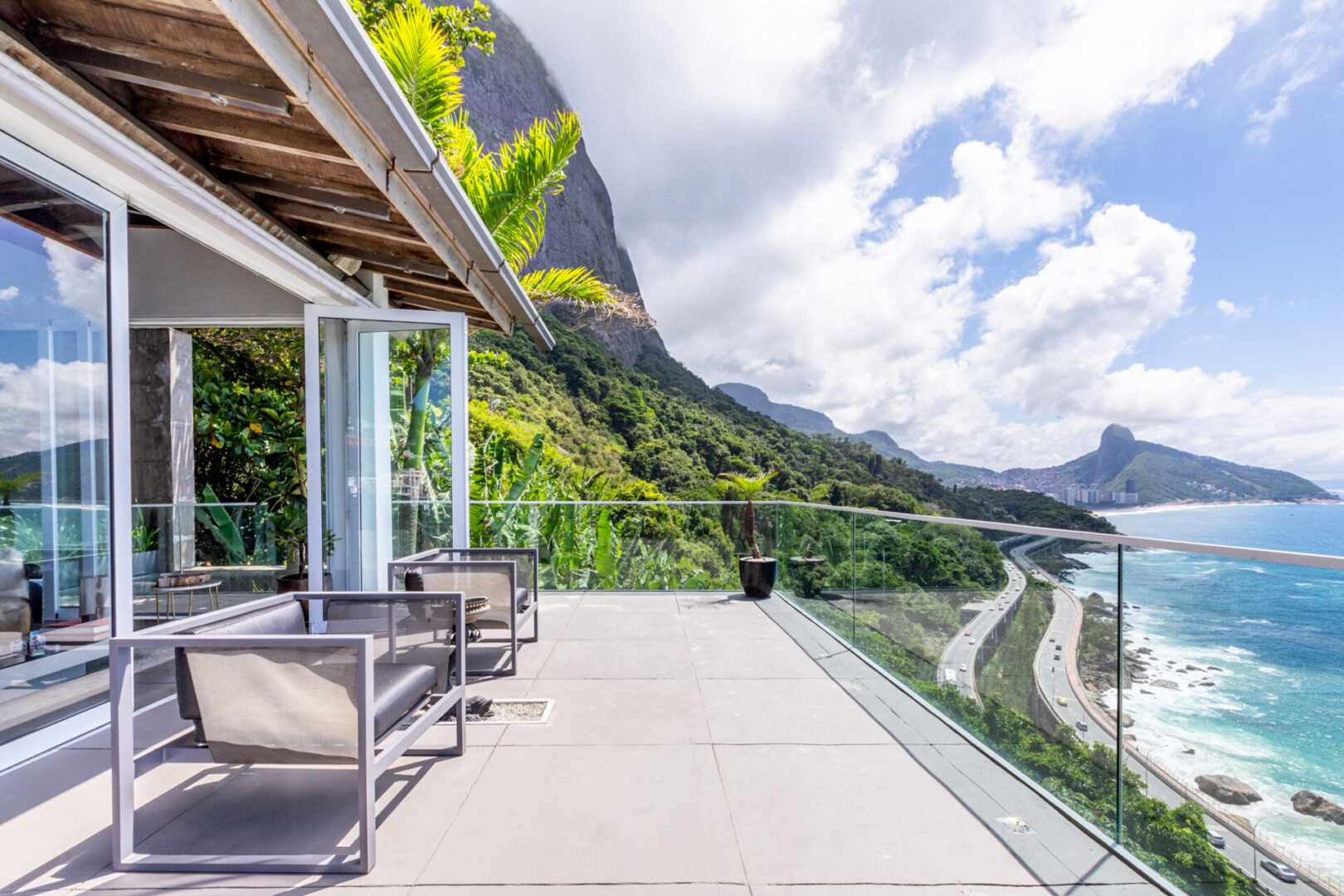
A house of glass on a cliff asks for more attention than a masonry house set back from the water. In exchange it gives you the only thing the plot was bought for: the whole ocean, from inside, at every hour, without a window frame telling you where to look.
That is a fair trade, and it is a trade — worth going in with the maintenance understood rather than discovered.
What to look at on a viewing
Go to the most exposed corner of the house and look at the fixings. Look at the underside of the balustrade rail, the hinge pins on the seaward doors, and the screws in the deck. Then look at the bottom corner of the largest pane, where sealant fails first.
Slide the biggest door. A large sliding panel that runs smoothly has had its track kept clean; one that binds has had salt and grit in it for a while. It is a thirty-second test and it tells you how the house has been looked after.
Finally, ask what the glass is. If the answer is laminated, on an exposed elevation, somebody was thinking about the right things.