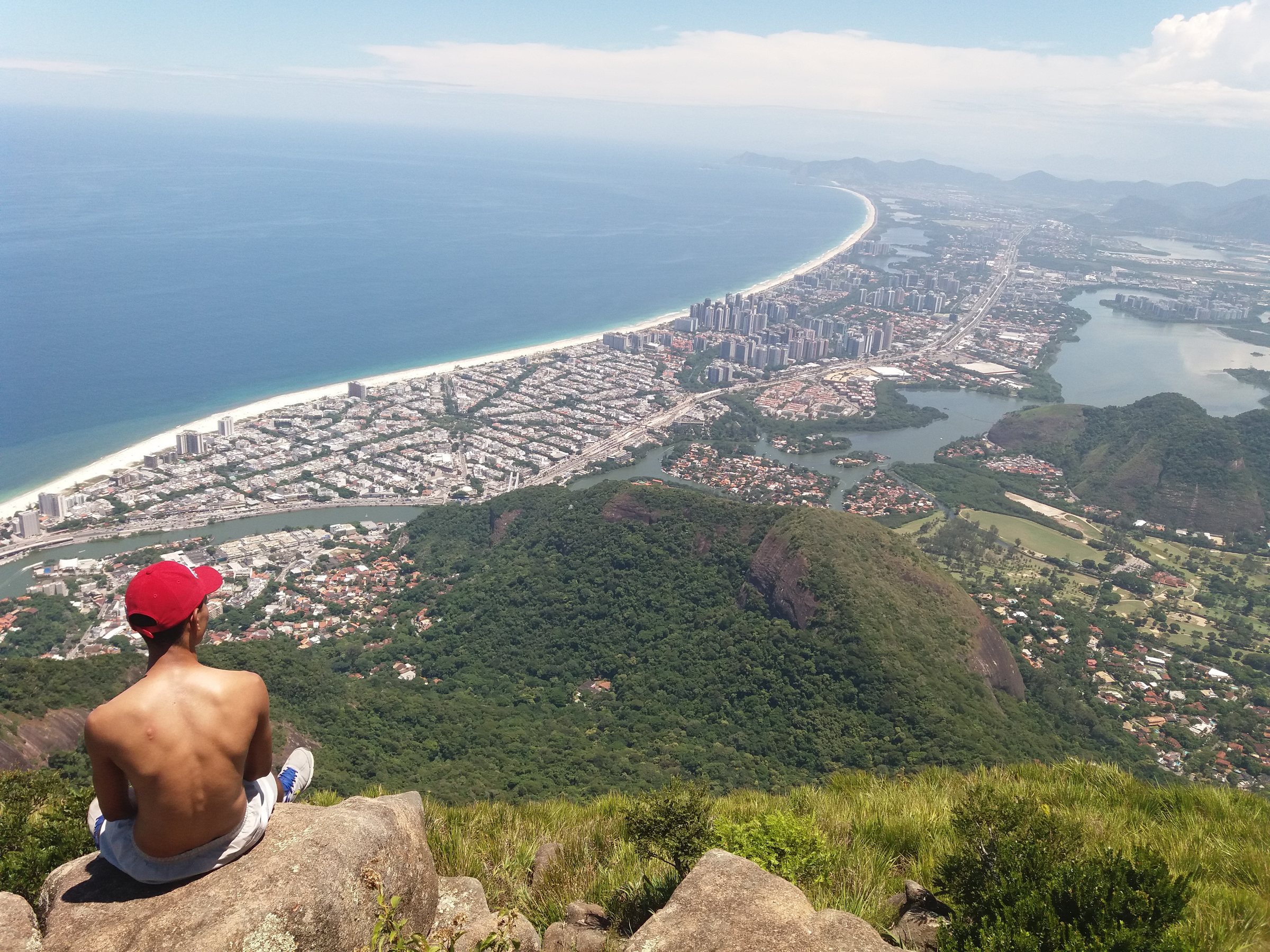
Ask which is the most expensive neighborhood in Rio de Janeiro and you will get three answers, all of them partly right. Leblon and Ipanema hold the record for the price of an apartment. But for a house — and Joá is nothing but houses — the numbers point one way. A 2025 market study of the city's high-end stock put Joá first, by average sale price, ahead of every beachfront name in the Zona Sul. This is a short, honest guide to why, and to what the figures actually mean when you get close to them.
Joá Rio is published from ADV101, a five-suite villa in Joá offered at R$ 15,000,000, shown privately by appointment through Art de Vivre.
Ask about a viewing on WhatsApp
Where Joá actually ranks
The study, by the property firm Loft and reported at the end of 2025, ranked Rio's neighborhoods by the average price of homes on the market above 125 square metres. Joá led the city, with an average around R$9.7 million and an average house size near seven hundred square metres. Behind it came the names you would expect — Leblon around R$6.1 million, Ipanema around R$5.5 million, then Jardim Botânico and Barra da Tijuca. Read plainly: the typical Joá house on the market costs more than the typical Leblon house, and substantially more than the typical Ipanema one.
The nuance — and it matters, because the two claims get conflated — is that this is about total house price, not price per square metre. On price per square metre for apartments, Leblon and Ipanema still lead Brazil, both above R$25,000 a metre at the end of 2025. Joá does not really have apartments. It has large houses on large plots, and it leads on the number at the bottom of the contract. Anyone who tells you Joá has "the most expensive square metre in Rio" is quoting a figure that the apartment market contradicts; the defensible, sourced claim is the one about houses.
- #1 in Rio by average house/mansion asking price — ~R$9.7M (Loft study, 2025).
- Ahead of Leblon (~R$6.1M) and Ipanema (~R$5.5M) on total house price.
- Typical size: around 700 m² of house; plots and built areas range widely.
- A real listing: a five-bedroom, 840 m² house inside the Condomínio da Joatinga, offered at R$10M.
- The ceiling: Márcio Garcia's mansion, listed in 2024 at a reported R$250M — an asking price, not a sale.
What's for sale, and where
The stock is dominated by cliffside and hillside houses, most of them inside gated condominiums, with a smaller number of vacant plots for those who want to build. The best-known of the condominiums is the Condomínio da Joatinga — the same gated community through which the public reaches Praia da Joatinga — with a second, the Condomínio do Joá, alongside it. Inside them, a recent listing gives the texture better than any average: a five-bedroom house of 840 square metres, offered at R$10 million. At any given time the neighborhood carries a few hundred active listings, from the merely expensive to the frankly stratospheric.
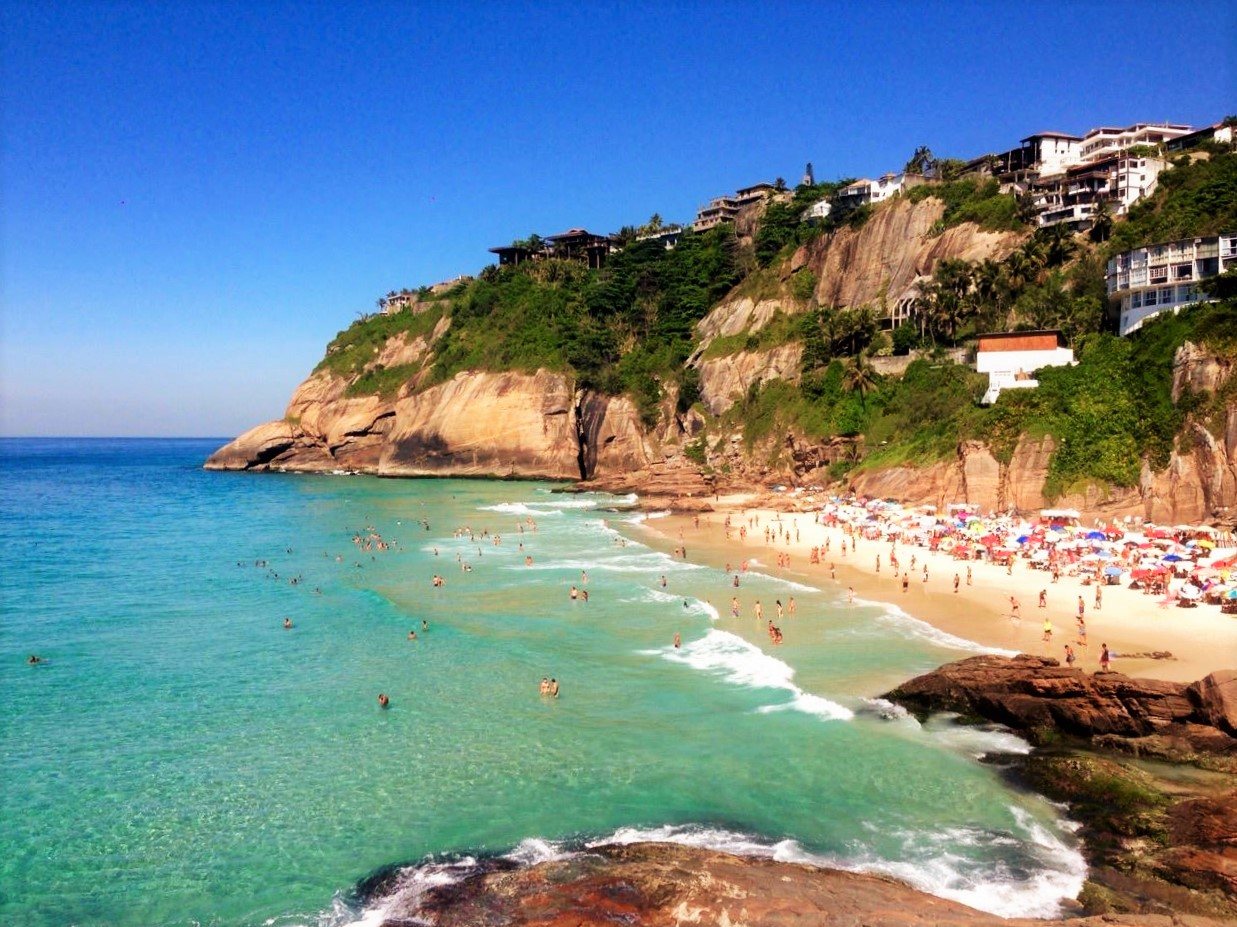
Almost no land left to build.
Joá is roughly a square kilometre and a half, most of it too steep or too protected to build on. There is no expansion here, no next phase, no empty quarter waiting for towers. The supply is close to fixed. That, more than any amenity, is what holds the prices where they are.
Why the premium holds
The premium is structural, not fashionable, and it rests on a few hard facts. Joá is tiny and, by the last census, among the least-populated neighborhoods in the entire city — fewer than a thousand residents, at the highest per-capita income in Rio. It is exclusively residential: no commerce, no towers, no through-traffic. Its plots are hemmed by the Atlantic on one side and the protected forest of the Tijuca massif on the other, so there is very little land and almost none of it easy to build on. Scarcity, privacy and a fixed frontier with the rainforest are not marketing lines here; they are the terrain. A buyer in Joá is paying for something the city cannot make more of.
A word of caution on the things people assert about building in Joá. It is often said, loosely, that the whole neighborhood sits inside a formal environmental protection area with strict height limits. We could not confirm a named conservation unit governing Joá itself, as distinct from the adjacent national park, and we won't print one as fact. What is verifiable is enough: the terrain limits construction, the city does enforce the boundary with the forest — it demolished four illegally built mansions here in 2024 — and the practical result is the same. Land is scarce, and it stays scarce.
Reading a Joá price
If there is one habit worth carrying into this market, it is telling an asking price from a sale. The headline that fixed Joá in the public mind — the R$250-million mansion "the most expensive in Brazil" — is an asking price that, by several accounts, has sat unsold and openly disputed. At the very top of this neighborhood, prices are announcements: a house is worth what one of a very small number of buyers will pay, on a given month, for a particular view. That is not a warning against Joá. It is simply how a market of a few hundred irreplaceable houses behaves. Come with your own read on value, and a broker who will tell you the difference between the two numbers.
One house on the crest is presented in full on this site — five suites, an infinity pool cut into the edge, ocean from every room, offered at R$ 15,000,000. Enter the house →